
22 Zen Garden Ideas That Turn Any Backyard Into a Calm Retreat

Most backyards sit there doing nothing. You walk past them, maybe pull a weed or two, and head inside. A zen garden changes that completely. It gives you a reason to slow down, breathe, and actually be in your outdoor space for a few minutes each day. Whether you have a small corner patio or a sprawling lawn, the principles behind zen garden design work at any scale.
Zen gardens, rooted in Japanese karesansui tradition, use rocks, gravel, sand, water, and restrained planting to create spaces built for contemplation. The good news is that you don’t need to recreate a Kyoto temple garden to get the benefits. A well-placed stone, a small bamboo cluster, or a simple raked gravel bed can shift the entire feeling of your outdoor space. These 22 ideas cover every budget and backyard size, from beginner DIY projects under $100 to full landscape transformations.
Each idea below includes what it looks like, why it works, where to place it, and what you’ll realistically spend to create it. Zen home design principles translate beautifully to outdoor spaces, and this guide shows exactly how.
1. Classic Raked Gravel Karesansui Bed
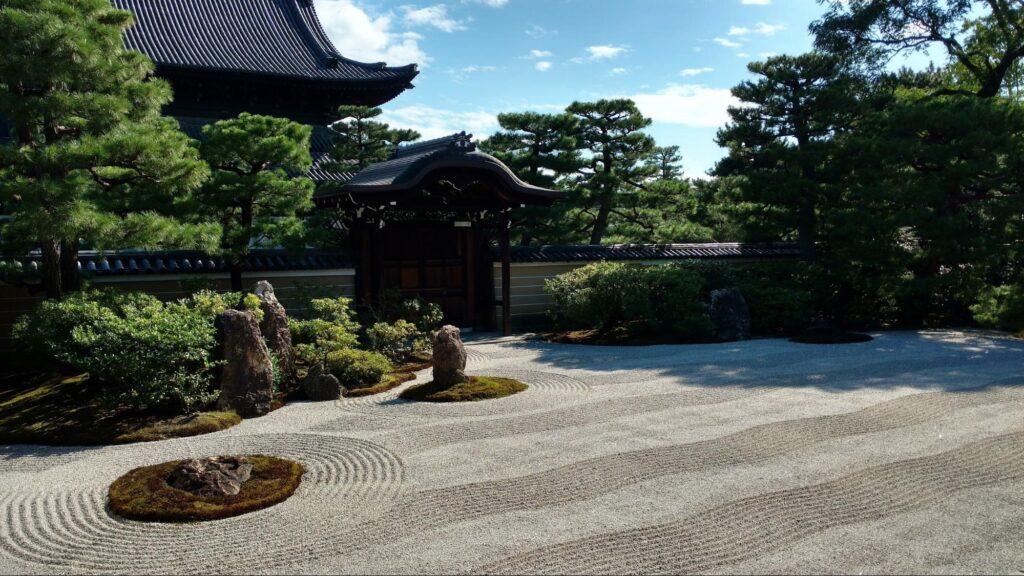
A raked gravel bed is the most iconic zen garden element, using pale crushed granite or decomposed quartz raked into wave patterns that represent flowing water.
The visual result is striking: parallel ripple lines surrounding a few carefully placed stones, the whole composition sitting in a defined rectangular or free-form border. The raking itself is meditative, and patterns can be changed as often as you like.
This works best on flat ground with good drainage. Install landscape fabric underneath before adding 3-4 inches of gravel to prevent weed growth. Use smooth Japanese-style gravel in light grey or white for the most authentic look. The stones inside the bed should vary in size, placed in odd-numbered groupings of 1, 3, or 5.
Compatible with modern japandi, traditional Japanese, and minimalist styles. Budget: $150-$500 depending on square footage.
2. Use a Single Large Boulder as a Focal Point
One well-chosen boulder placed off-center in a gravel bed creates the kind of visual anchor that holds an entire garden composition together.
In Japanese garden design, large rocks represent mountains or islands. A single granite or basalt boulder of 200-400 lbs placed at roughly one-third into the space (following the rule of thirds) creates asymmetry that feels natural rather than staged. The surrounding gravel is raked in concentric circles outward from the base.
Source boulders from local landscape suppliers, as delivery costs make online purchasing impractical. Look for weathered surfaces with natural moss or lichen already present. Avoid artificially cut stones. Budget: $80-$300 for the rock plus delivery.

3. Plant a Bamboo Privacy Screen
A row of clumping bamboo planted along a fence line creates a living privacy screen that moves in the wind, adding sound and motion without visual clutter.
Clumping varieties like Fargesia murielae (Fountain Bamboo) or Fargesia nitida stay contained and work in most climates down to USDA Zone 5. Running bamboo spreads aggressively and should always be contained with a root barrier if used in open ground. Plant bamboo in large cedar planters for an even safer approach, and the pots add an architectural element of their own.
Bamboo works best as a backdrop along the northern or western edge of the garden, letting it block wind and create an enclosure without casting shade over the main viewing area. Style compatibility: japandi, modern, traditional Japanese, cottagecore. Budget: $100-$400 for 3-5 plants.

4. Lay a Stepping Stone Path Through Gravel
Flat stepping stones set into a gravel bed at a natural walking pace guide movement through the garden and add a tactile, grounding element underfoot.
Use bluestone, slate, or irregular flagstone for a natural look. Each stone should be at least 16 inches wide and set flush with or slightly above the gravel surface. The path doesn’t need to go anywhere in particular: a curved route that leads to a bench or a viewing spot is enough. The act of walking on the stones mindfully is part of the garden’s purpose.
Space stones 20-24 inches center to center, matching a comfortable stride. Irregular spacing looks more natural than rigid rows. Gravel fills in around each stone, and moss encouraged to grow in the cracks adds age and softness. Budget: $120-$350 for materials.

5. Build a Small Koi Pond with a Rock Waterfall
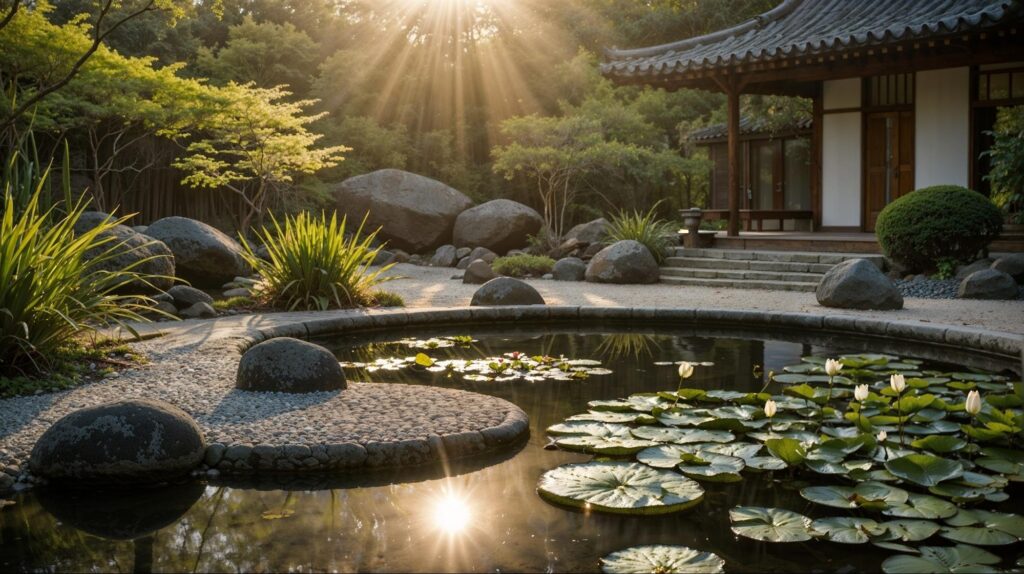
A small koi pond with a rock waterfall brings sound, movement, and living color into a zen garden while reinforcing the symbolic importance of water in Japanese garden design.
A preformed pond liner of 50-100 gallons is enough for 4-6 small koi. Stack local fieldstone or river rock above the pond’s edge to create a cascading waterfall using a submersible pump. The sound of moving water masks street noise and creates an acoustic backdrop that’s difficult to replicate with any other garden feature.
Koi are surprisingly easy to keep: feed once daily, install a basic biological filter, and avoid direct afternoon sun by positioning the pond on the east side of the garden. Water lilies or lotus add surface cover and reduce algae growth. Budget: $400-$1,200 for a complete setup.
6. Replace Grass With a Moss Ground Cover
Moss lawns are the quietest, lowest-maintenance ground cover available, and they give a zen garden the lush green carpet that traditional Japanese temple gardens are built on.
Sheet moss, cushion moss, and fern moss all work in shaded to partly shaded spaces with slightly acidic, moist soil. Prepare the area by removing existing grass, loosening soil to 2 inches, and pressing moss sections flat against the ground. Water daily for the first two weeks, then weekly once established.
Moss doesn’t require mowing, fertilizing, or pesticides. In a zen garden, it softens the edges between stone paths and gravel beds, and it ages beautifully, developing richer texture over time. Best in USDA Zones 5-9 in humid climates. Budget: $50-$200 depending on coverage area.

7. Place a Traditional Stone Lantern Near Water
A stone lantern positioned at the edge of a pond or along a path creates one of the most recognizable silhouettes in Japanese garden design, adding vertical interest and cultural authenticity.
The yukimi-doro (snow-viewing lantern) with its wide, flat cap is the most common style for residential gardens. Cast concrete or natural granite versions are available from most garden centers. Place the lantern at water’s edge or at a path bend where it can be seen from the main viewing point or seating area.
Lanterns don’t need to be functional, but solar-powered versions that glow softly at dusk extend the garden’s usefulness into evening hours. Pair with low ornamental grasses like Japanese forest grass at the base to soften the transition between stone and soil. Budget: $80-$350 depending on material and size.

8. Add a Low Cedar Meditation Bench
A simple low bench made from untreated cedar or ipe wood gives the garden a destination: a place to sit, look, breathe, and be still without any other agenda.
The bench should be 16-18 inches high and long enough for one or two people. Cedar weathers beautifully without treatment and develops a silver-grey patina that blends with stone and gravel over time. Position it facing the garden’s focal point, whether that’s a pond, a boulder grouping, or a bamboo screen.
A bench makes the garden usable rather than purely decorative. Set it on a flat stone pad to prevent ground contact and extend the wood’s life. For smaller spaces, a single flat sitting stone works just as well, reinforcing the natural aesthetic. Budget: $60-$180 for DIY cedar bench or large flat stone.

9. Use a Wide Ceramic Bowl as a Reflecting Pool
A large glazed ceramic or concrete bowl filled with water acts as a minimalist water feature that reflects sky, light, and surrounding plants without the complexity of a full pond installation.
Choose a bowl at least 18 inches in diameter with no drainage hole. Fill with water and add a handful of dark river pebbles to the bottom for visual depth. A single water lily or lotus cutting adds life, and floating candles work well for evening ambiance. The water surface becomes a mirror, changing appearance throughout the day as light shifts.
This works on a patio, deck, or directly in a gravel bed. It costs very little, requires no plumbing, and can be moved indoors during winter in cold climates. Style compatibility: modern, minimalist, japandi. Budget: $30-$120.
10. Create a Desktop Sand Tray Garden for Small Spaces
A shallow wooden tray filled with fine white sand, three small stones, and a miniature rake creates a working tabletop zen garden that delivers the same meditative benefits as a full outdoor design.
This is the best solution for apartment balconies, small patios, or anyone not ready to commit to a full garden project. Use a cedar or hinoki cypress tray of at least 12×18 inches for enough raking surface. Kiln-dried play sand or purpose-sold zen garden sand both work. Include stones of different textures: smooth quartz, rough lava rock, and mossy river pebble.
Change the patterns whenever you want. The act of raking slowly is itself the point. Many people keep these on their home office desks. Small succulents in a corner of the tray add low-maintenance greenery. Budget: $25-$80 complete.

11. Shape a Dry River Bed With Rounded River Rocks
A dry river bed made from rounded river rocks of varying sizes creates the visual suggestion of water flowing through the garden, solving drainage problems while adding a strong design element.
The bed should curve naturally rather than run straight, following the logic of how water actually flows across a landscape. Use larger rocks along the outer bends and smaller pebbles toward the center to mimic natural sedimentation. Landscape fabric underneath prevents weeds while still allowing water to drain during rain.
Dry river beds serve a practical purpose in sloped gardens where water runoff is a problem: they channel water to a specific drainage point while looking intentional. Add dwarf muhly grass or Japanese blood grass along the edges for soft, seasonal color. Budget: $100-$400 depending on length.
12. Anchor a Corner With a Japanese Maple
A Japanese maple placed in a garden corner provides the seasonal color, fine texture, and strong branching structure that grounds an entire zen garden composition through all four seasons.
Acer palmatum cultivars like ‘Bloodgood’ (deep burgundy, 15 ft), ‘Crimson Queen’ (weeping, 10 ft), or ‘Sango Kaku’ (coral bark, stunning in winter) all work well in residential gardens. Position the tree so it’s visible from the main seating area and frames the garden’s focal point from one side without blocking the view.
Japanese maples prefer morning sun and afternoon shade, well-drained acidic soil, and protection from harsh wind. They’re compatible with stone, gravel, and moss compositions and pair naturally with Japanese zen garden design ideas that emphasize seasonal change and wabi-sabi aesthetics. Budget: $80-$400 depending on size.
13. Install a Bamboo Shishi-Odoshi Water Spout
A shishi-odoshi, the traditional bamboo water spout, fills slowly with water, tips forward to release it with a hollow knock against a stone, then resets, producing one of the most soothing sounds in garden design.
Kits are available for $60-$200 and connect to a small submersible pump in a hidden reservoir. The bamboo spout is positioned over a stone basin, and the sound carries surprisingly far. Traditional gardens used these to scare off deer, but in a residential zen garden the rhythm becomes a soft, irregular clock that marks time without pressure.
Install on a flat surface close to an outdoor outlet. The reservoir needs topping up in dry weather, but otherwise maintenance is minimal. The visual and acoustic impact is disproportionate to the cost. Budget: $80-$250 installed.
14. Rake Geometric Patterns Into White Sand
White or pale grey sand raked into precise geometric patterns, concentric circles, parallel waves, or crossing diagonals, creates a visual meditation object that changes meaning depending on light and angle of view.
Use a wide-toothed wooden rake for broad parallel lines, and a finer implement or a fork for detail work around stones. Straight parallel lines suggest stillness and order. Circles rippling out from stones suggest movement and impact. The pattern will be disrupted by wind and rain, which is part of the practice: impermanence is a core principle of zen.
Contain the sand in a defined border of cedar edging, slate tiles, or low masonry to keep it clean and prevent it mixing with surrounding soil. White sand requires occasional top-ups as weather compacts and discolors the surface. Budget: $40-$120 for materials.
15. Build a Moss-Covered Rock Cluster
A grouping of three or five rocks in odd-numbered arrangement, with moss encouraged to grow across their surfaces, creates a living composition that looks older and more established with every passing season.
Collect rocks of varying sizes from local sources, avoiding uniform shapes. Encourage moss growth by misting rocks daily in a shady spot for several weeks. In humid climates, moss will colonize naturally within one season. Buttermilk painted onto rock surfaces accelerates the process.
Place the grouping where it receives dappled light rather than full sun, which dries moss too quickly. These arrangements work beautifully at the end of a path, beside a meditation bench, or as a counterpoint to a smooth gravel field. Budget: $20-$80, primarily for transportation if rocks are collected locally.

16. Frame Garden Beds With Black Pebble Borders
Black polished pebbles used as a border between planted beds and gravel paths create a sharp visual definition that makes the whole garden feel more composed and deliberate.
Mexican beach pebbles in 1-2 inch size are the standard choice: smooth, consistent, and deeply black when dry. A 3-4 inch wide strip of these pebbles along the edge of a gravel bed or path creates a strong contrast that separates elements cleanly. The effect is especially striking where pale gravel meets dark pebbles.
Use them around the base of stone lanterns, along pond edges, or to frame a planted island within a larger gravel field. Black pebbles are also popular in contemporary zen gardens that favor a darker, more dramatic palette alongside charcoal gravel and dark stone. Budget: $40-$150 per 50 lbs bag depending on source.
17. Fill a Shady Corner With Ferns and Dark Gravel
A shaded corner planted with Japanese painted ferns, autumn ferns, or maidenhair ferns over dark lava gravel creates a cool, textural refuge that contrasts with sunnier open areas of the garden.
Ferns bring the only planting that genuinely thrives in deep shade, and their feathered fronds and soft green-silver tones add a completely different visual texture from stone and gravel. Japanese painted fern (Athyrium niponicum ‘Pictum’) is particularly beautiful, with silver and burgundy markings.
Use black lava rock or dark decomposed granite underneath rather than pale gravel, creating a shadowy, forest-floor mood. Add a small stone Buddha or carved figure tucked among the ferns for a focal point. Compatible with woodland, Japanese, and cottagecore styles. Budget: $80-$200 for plants and gravel.
18. Build a Low Minimalist Wood Platform Over Gravel
A low deck of 10-12 inches height built from cedar, ipe, or thermally modified ash and set directly over a gravel bed creates a clean, elevated sitting platform that floats above the garden composition.
The platform should be simple: no railings, no pergola, no furniture beyond one or two low cushions. The deck becomes a meditation platform as much as a functional space. Gravel visible between and around the deck boards creates the impression that the wood is floating, reinforcing the minimalist aesthetic.
Keep the deck small, between 8×8 and 10×12 feet, to maintain the garden’s sense of openness. Cedar left untreated weathers to a silver-grey that harmonizes with stone. The deck also provides a dry, clean surface for barefoot standing or morning stretching. Budget: $400-$1,200 for materials and basic construction.
19. Add Stacked Stone Cairns as Garden Accents
Small stone cairns, three to five flat rocks balanced in a tower, serve as handmade garden accents that carry a sense of patience, intention, and impermanence wherever they’re placed.
Collect flat river rocks of gradually decreasing size and practice the balance at home before placing them in the garden. Most cairns will last several weeks in calm weather before wind or a passing animal topples them. Rebuilding them is part of the practice. The stacking itself, requiring focus and stillness, is a meditative act.
Place cairns along the edge of a path, beside a pond, or on larger boulders within a gravel bed. They work especially well as seasonal decorations that change in composition year-round. Budget: $0-$20 if stones are collected locally.

20. Frame Your Garden Entrance With a Mini Torii Gate
A scaled-down torii gate at the entrance to a zen garden signals a threshold: the moment of transition from ordinary space to intentional space, reinforcing the psychological shift that makes these gardens work.
Wooden torii gates in cypress or cedar can be purchased as kits or built from dimensional lumber. A gate of 5-6 feet height works well in most residential gardens without feeling oversized. The classic vermilion red finish is traditional, but natural wood or charcoal grey suits modern and japandi aesthetics.
Position the gate where the garden begins: at a path entrance, at the top of steps, or framing the transition from lawn to gravel. Even a small symbolic gate changes how visitors (and you) enter the space. Budget: $150-$500 for a pre-made or DIY gate.
21. Bring a Zen Corner Garden Indoors
An unused corner of a living room, bedroom, or home office can hold a small indoor zen garden using a shallow gravel tray, two or three plants, and a single sculptural stone, creating a daily focal point for quiet reflection.
Use a low wooden planter of at least 24×36 inches filled with fine white gravel. Add a small bonsai, a clump of dwarf mondo grass, or a single succulent for living material. One smooth stone and a small raked pattern in the gravel complete the composition. A small tabletop bamboo fountain adds sound if the space allows.
Indoor zen corners work best in rooms where you already spend quiet time: reading rooms, home offices, or meditation spaces. Keep them simple: three elements maximum. Complexity defeats the purpose. Style compatibility: japandi, minimalist, Scandinavian. Budget: $60-$180 for the full setup.
22. Use LED Stone Lanterns for Nighttime Atmosphere
Solar-powered LED lanterns shaped like traditional stone yukimi-doro extend the zen garden’s atmosphere into evening hours, casting warm low light across gravel and stone without any wiring.
Modern solar lanterns have improved dramatically in quality and light output. Look for lanterns with a warm white 2700K color temperature rather than cool white, which looks harsh on natural materials. Place them at path bends, beside the pond, or flanking a seating area. Three to five lanterns are enough for most residential gardens.
The garden changes personality at night: shadows from stones and plants create new patterns across the gravel, and the quiet glow invites sitting outdoors after dinner in a way that bright patio lighting doesn’t. Budget: $30-$150 for a set of 4 lanterns.
Design Tips for Zen Garden Ideas
The most common design mistake is trying to include too many elements. A zen garden gains power from restraint: three strong elements placed well outperform ten elements scattered randomly. Start with the main surface material (gravel, moss, or sand), add one large stone or tree as a focal point, then add secondary elements one at a time.
Color palette matters as much as materials. Traditional zen gardens use three or four tones: the grey-white of gravel, the dark green of moss or conifers, the warm grey of stone, and one accent such as the red bark of a Japanese maple or the green of bamboo. Avoid adding flowers unless they’re species with restrained bloom, like single white azaleas or dwarf cherry.
Scale all elements to your space. A 500-lb boulder that reads as correct in a large backyard becomes oppressive in a 10×10 corner garden. Use photos to test proportions before purchasing heavy materials. Odd-numbered groupings of rocks and plants always look more natural than even numbers.
Maintenance requirements vary widely. Gravel beds need raking once weekly and edging once monthly. Bamboo needs water during establishment but is drought-tolerant once rooted. Koi ponds require daily feeding, weekly water checks, and an annual cleanout. Match the design complexity to the time you’re actually willing to invest.
Common Mistakes to Avoid With Zen Garden Ideas
Overcrowding is the most frequent problem in home zen gardens. Every element competes for attention when there are too many, and the result is visual noise rather than calm. Plan to start with half the elements you think you need, live with the design for one season, then add if the space genuinely calls for it.
Using the wrong gravel is a close second. Colorful mixed gravels with orange, blue, and white pebbles look playful, not zen. Stick to a single tone in grey-white, silver, or dark charcoal. River pebbles in earth tones work. Dyed decorative gravel does not.
Planting too many species undermines the restrained palette. Choose two or three plants and repeat them at different scales rather than collecting a variety. One Japanese maple, three bamboo stems, and a ground cover of moss is a complete planting plan. Fifteen different specimen plants creates a collection, not a garden.
Ignoring the view from inside the house is a missed opportunity. The best zen gardens are designed to be seen from a specific window or door as much as walked through. Stand inside your home and identify the view lines before positioning any major elements. A boulder or tree framed by a window becomes a painting.
Running water features without checking local regulations on water use can create problems in drought-prone regions. Check HOA rules before building permanent structures like walls, gates, or ponds. A pergola or torii gate may require a building permit depending on height.
Check These Related Ideas
The zen garden ideas here cover a wide range of scales, from a $25 desktop sand tray to a full backyard transformation with a koi pond and Japanese maple. The right starting point is the one that fits your actual space, budget, and how much time you want to invest in upkeep.
Pick one element and commit to placing it well before adding anything else. A single large boulder in pale gravel, a bamboo screen that blocks a neighboring fence, or a low cedar bench facing a stone lantern: any of these, done thoughtfully, can shift the feeling of an outdoor space completely. The goal isn’t to recreate Japan. It’s to create a place in your own backyard where you can slow down, and actually want to.
Frequently Asked Questions
How much does a zen garden cost to build?
A simple zen garden with raked gravel and a few stones costs $150-$500. Mid-range designs with a water feature and Japanese maple run $800-$2,000. Full koi pond and bamboo screen installations range from $2,000-$8,000 professionally installed.
Can I create a zen garden in a small backyard or patio?
Yes. A 10×10 foot corner space is enough for a gravel bed, one boulder, and a stepping stone path. Container bamboo, tabletop sand trays, and ceramic reflecting bowls work even on small balconies with no ground space at all.
What plants grow best in a zen garden?
Japanese maple, clumping bamboo, moss, dwarf mugo pine, ferns, and ornamental grasses are the most common choices. All have fine texture, restrained color, and low maintenance needs that suit zen garden aesthetics.
How do I keep weeds out of a gravel zen garden?
Install landscape fabric or geotextile membrane underneath the gravel before spreading it. Use at least 3 inches of gravel depth to suppress light. Re-rake the surface monthly and pull any breakthrough weeds immediately before they establish root systems.
What is the difference between a zen garden and a Japanese garden?
A zen garden (karesansui) is a specific Japanese garden style using only dry materials: gravel, sand, and stone with minimal planting. A Japanese garden is broader and includes water features, bridges, lush planting, and strolling paths. Both share an aesthetic of restraint and natural harmony.
Can koi live in a small backyard pond?
Yes. A 50-100 gallon preformed liner supports 4-6 small koi (under 8 inches). They need a biological filter, shade coverage of at least 30% of the water surface, and daily feeding. Avoid ponds smaller than 50 gallons as temperature and water quality fluctuate too rapidly.
What type of gravel is best for a zen garden?
Crushed Japanese granite or decomposed quartz in pale grey or white is traditional. Pea gravel in light tones works well at lower cost. Avoid dyed gravel or colorful mixed pebbles. Aim for a single consistent tone in the 1/4 to 3/8 inch size range for the cleanest raking surface.
