27 Mini Zen Garden Ideas That Turn Any Small Space Into a Calm Retreat
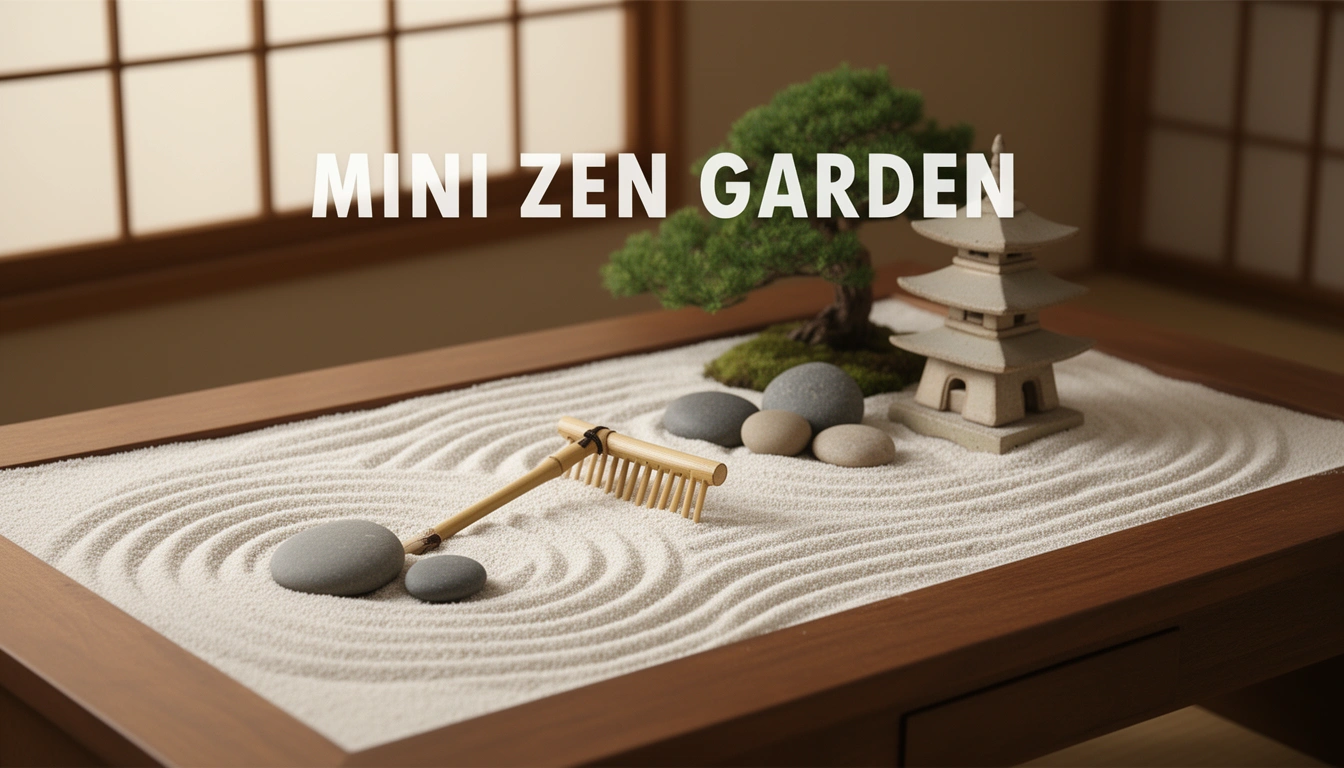
A full backyard zen garden takes space, planning, and a fair amount of time to build. A mini zen garden takes a wooden tray, some fine sand, three stones, and about ten minutes. The result is the same feeling: a small pocket of deliberate calm that pulls your attention away from whatever was stressing you out and gives your hands something gentle and repetitive to do.
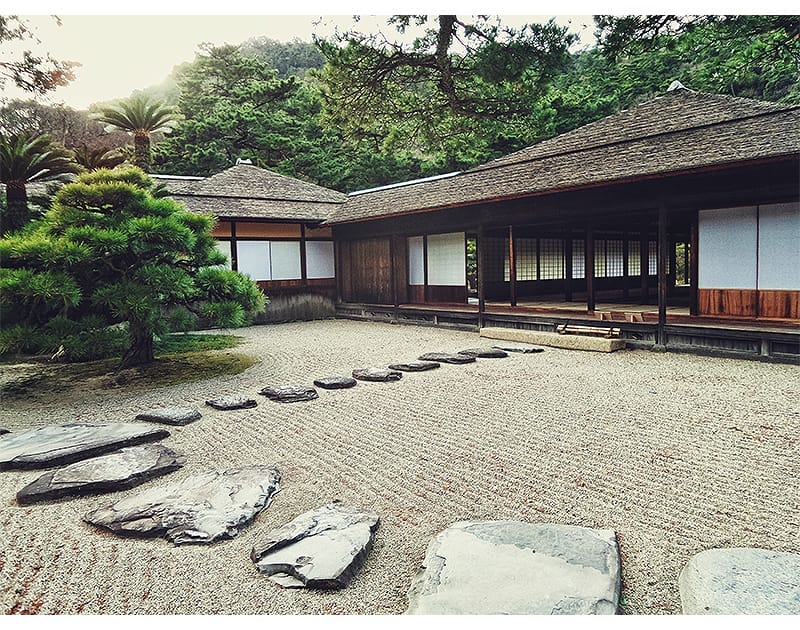
Mini zen gardens originated as desk-sized versions of the karesansui dry rock gardens built by Buddhist monks in Japan as far back as the sixth century. Those full-scale gardens used raked gravel to represent flowing water and large stones to represent mountains and islands. The miniature version brings the same visual logic to a tray you can set beside your keyboard, on a bookshelf, or on a windowsill above the kitchen sink. The raking is the point, but so is the arrangement, the choice of materials, and the way a few square inches of intentional design can change how a whole room feels.
Below are 27 mini zen garden ideas covering traditional sand-and-stone designs, plant-forward versions, themed builds, DIY variations, and placement ideas for every room in the house.
1. Classic White Sand and River Stone Desktop Garden
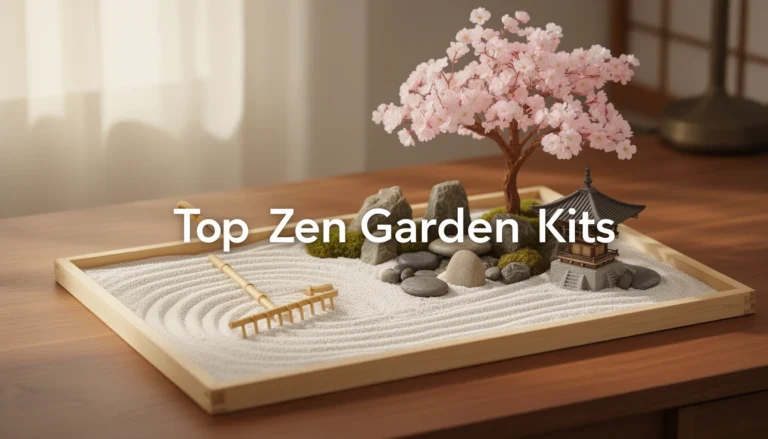
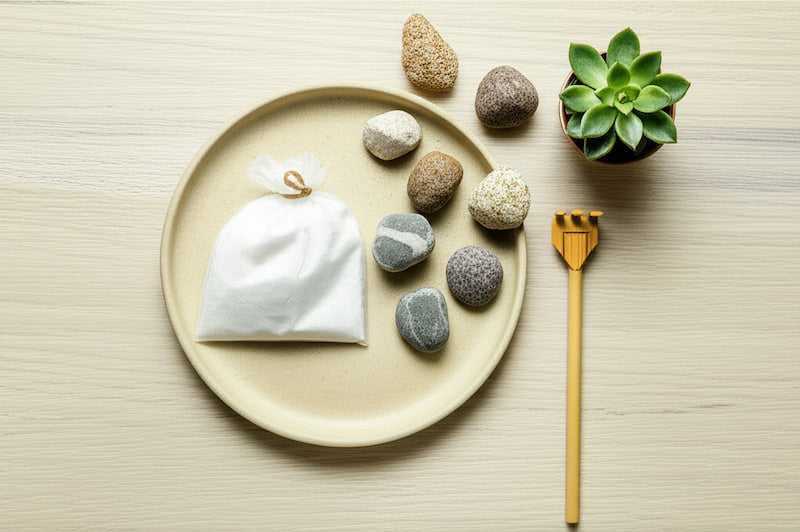
The most traditional mini zen garden uses a shallow wooden tray, fine white sand, three to five smooth river stones, and a bamboo or wooden rake. This is the design that most people picture when they hear the words “desktop zen garden,” and it earned that mental image for good reason: it works beautifully.
The white sand stays bright under any lighting condition, which makes raked patterns highly visible and satisfying. River stones in dark gray or black create a strong contrast that anchors the arrangement. Rake the sand into gentle horizontal waves, concentric rings around each stone, or simple straight lines depending on what you need from the moment. Start with just three stones placed off-center and asymmetrically, the way a Japanese garden designer would, rather than symmetrically arranged as western instincts often suggest.
Budget: $15 to $40 for a complete kit, or $8 to $15 to source materials separately. Best placement: office desk, kitchen counter, reading nook side table.
2. Black Sand Contrast Garden
Swap white sand for black or very dark gray sand and the entire mood of the garden shifts. Black sand absorbs light rather than reflecting it, which gives the garden a quieter, more contemplative quality. White or pale stone against black sand creates a stark, high-contrast arrangement that reads as dramatic and modern rather than soft and traditional.
This version suits japandi-style rooms, dark wood furniture, and workspaces with a monochromatic or industrial aesthetic. The dark base also shows rake lines extremely clearly, which makes pattern work more visually rewarding. Black decorative sand is widely available in craft stores and online in the same fine grain as white options.
Budget: $10 to $35. Best placement: creative studio desk, modern minimalist home office, bedside table in a dark-toned bedroom.
3. Air Plant and Pebble Terrarium Garden
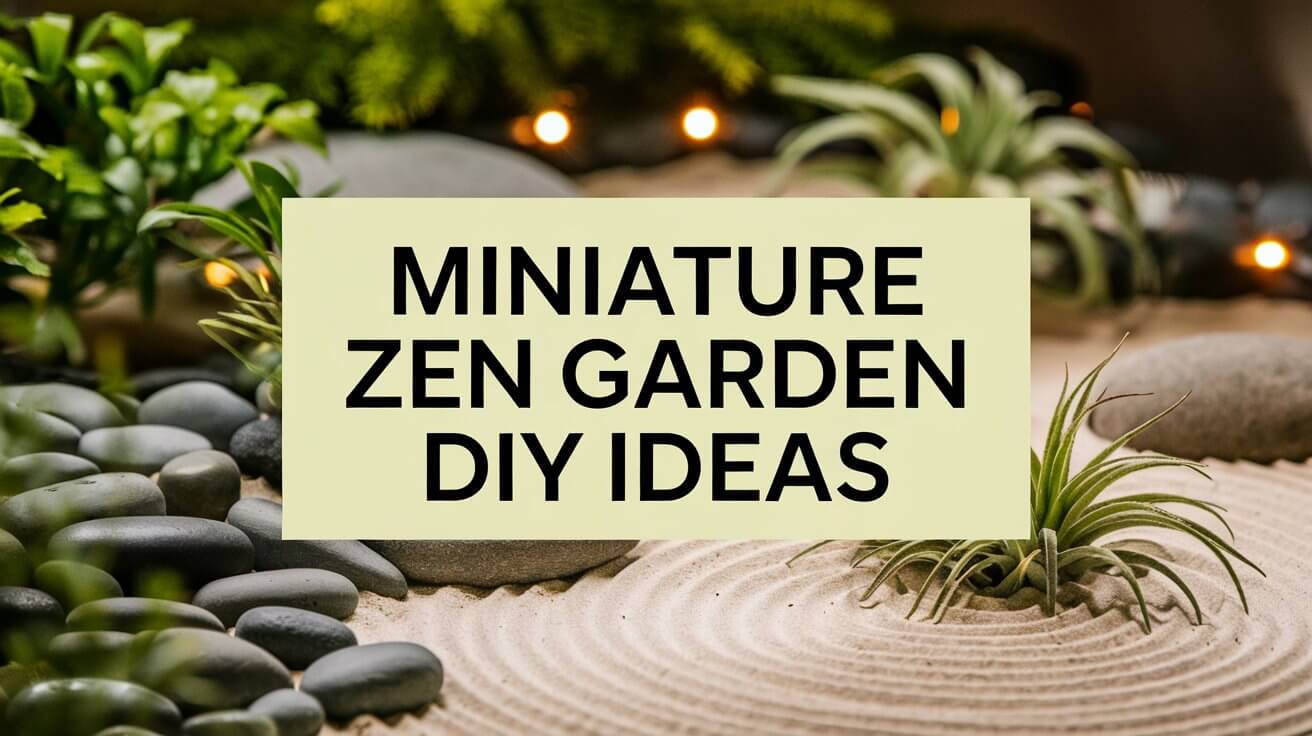
Air plants (tillandsia) need no soil and very little water, which makes them one of the best living elements to add to a mini zen garden. Place two or three small tillandsia varieties among smooth pebbles in a shallow ceramic dish or glass bowl, mist them twice a week, and they’ll stay healthy for years. The silver-green texture of an air plant against pale gravel has a spare, otherworldly quality that suits the wabi-sabi aesthetic perfectly.
Air plant zen gardens sit in the middle ground between a traditional sand garden and a terrarium. The sand or gravel base gives them a raking surface if you want one, but the plants become the main visual element. This version works especially well on a bathroom shelf or kitchen windowsill where humidity from daily routines keeps the plants naturally hydrated, which also connects well to the plant-forward philosophy behind zen kitchen ideas.
Budget: $20 to $60 depending on plant varieties and container. Best placement: bathroom shelf, kitchen windowsill, bedroom side table.
4. Moss and Stone Woodland Garden
A moss-covered mini garden trades the raked sand aesthetic for something lusher and more organic. Sheet moss pressed flat into a shallow container, with two or three stones placed as if naturally deposited, creates the feeling of a forest floor compressed into a tray. The deep green color and velvety texture make this version feel alive in a way that sand gardens don’t.
Preserved sheet moss (available at craft stores) requires no watering and stays green indefinitely. Live moss needs indirect light and light misting every few days. For a desk or indoor shelf, preserved moss is the more practical choice. Add a single piece of driftwood or a small ceramic figurine to complete the scene. Landscape architect Marc Peter Keane describes the zen garden as a journey where each element slows you down, and a moss garden achieves that through texture rather than pattern.
Budget: $15 to $50 for materials. Best placement: bookshelves, windowsills, coffee tables, meditation corners.
5. Aqua Blue Sand Coastal Garden
Aqua or turquoise craft sand shifts the visual reference from traditional Japanese karesansui to something more coastal and water-inspired. Blue sand in a white or light-wood tray reads as ocean surface, and placing white or pale gray stones becomes a way of creating islands and sandbars within a miniature seascape.
This version suits beachy, Scandinavian, or light-filled coastal interiors. It also works as a children’s room accent piece since the vivid color tends to engage younger attention more readily than white sand. Blue sand shows rake patterns slightly differently from white: the lines appear deeper and more defined, which makes wave and ripple patterns look particularly good.
Budget: $15 to $40. Best placement: coastal-style living rooms, bathroom countertops, children’s reading nooks.

6. Succulent and Gravel Dish Garden
Low-growing succulents like echeveria, haworthia, or sedum make excellent mini zen garden plants because they’re nearly impossible to kill, stay compact, and come in a wide range of textures from smooth and waxy to spiky and architectural. Plant two or three varieties in a shallow ceramic dish with fine gravel or coarse sand, and top-dress with small pebbles to cover the soil.
The resulting garden looks deliberately designed rather than improvised, with the natural geometry of succulent rosettes providing visual structure. This version needs a bit more light than a pure sand garden, ideally a bright windowsill with indirect sun, but it requires almost no maintenance beyond occasional watering. Unlike zen garden ideas that rely purely on stone and sand, this one adds living color to a space that needs it.
Budget: $20 to $60 depending on pot and plant quality. Best placement: bright kitchen windowsill, sunny office desk, bathroom shelf near a window.

7. Glow-in-the-Dark Night Garden
Glow-in-the-dark craft sand charges under daylight or a UV lamp and emits a soft phosphorescent glow after dark. In a black or matte dark-colored tray, the effect is genuinely striking: the raked patterns glow like moonlit water while the surrounding tray disappears into shadow. Glass or metallic stones catch the residual glow and add extra visual depth.
This is the right mini zen garden for a nightstand, where raking it before sleep becomes a calming pre-bedtime ritual, or for a creative workspace where you work late and want a piece of the room to feel alive after the overhead lights go off. The glow fades gradually over one to two hours, which mirrors the natural dimming of a night sky.
Budget: $20 to $50 for glow sand and a dark tray. Best placement: bedside table, creative studio, meditation corner.
8. Aromatherapy Sand Garden
Fine sand absorbs and slowly releases essential oil fragrance, which turns a standard mini zen garden into a multi-sensory experience. Add three to five drops of lavender, sandalwood, eucalyptus, or cedarwood oil directly to the sand before raking. The scent releases gently as you disturb the sand during raking sessions, creating a moment that engages smell, touch, and sight simultaneously.
Himalayan pink salt works even better than sand for this purpose: its larger crystal structure holds fragrance longer and releases it more steadily. Refresh the scent every week or two with another few drops. Adding a few dried lavender sprigs or rosemary stems alongside the stones complements the aromatherapy element with a visual one.
Budget: $15 to $40 for materials plus $5 to $15 for essential oils. Best placement: desk during work hours, yoga or meditation space, bathroom.
9. Travel Tin Portable Garden
An Altoids tin, small wooden cigar box, or flat metal travel tin becomes a fully functional mini zen garden with just a thin layer of fine sand, two or three tiny stones, and a toothpick or small fork as a rake. The entire setup fits in a bag, a desk drawer, or a jacket pocket, making it available wherever a stressful moment finds you.
The constraints imposed by a travel tin are actually part of the design discipline: you can only fit two or three stones and a very small rake, which forces minimalism that a larger tray doesn’t require. Some people find the limitations of a travel garden more meditative than a larger version precisely because there’s less to manage and rearrange. A mini tin garden also makes one of the most thoughtful, inexpensive gifts possible.
Budget: $5 to $15 total. Best placement: handbag, work bag, desk drawer, carry-on luggage.
10. Wabi-Sabi Ceramic Bowl Garden
Wabi-sabi, the Japanese aesthetic of imperfect beauty and natural aging, translates directly into mini zen garden design when you use a handmade ceramic bowl as the container. An irregular oval or round bowl with an uneven glaze, a slight lean, or visible finger marks in the clay makes a more interesting base than a perfectly manufactured tray. Fill it with fine gravel or sand and add two or three stones with character, perhaps one with a crack, one with moss growing on it, one with an unusual shape.
This version of the mini zen garden feels more like a considered art object than a mass-produced desk accessory. Look for pieces at local pottery studios, craft fairs, or from small ceramic makers online. The imperfection of the container and the natural variation in each stone are features, not flaws, which is exactly what wabi-sabi teaches.
Budget: $25 to $100 depending on the ceramic piece. Best placement: coffee table, living room shelf, meditation corner.
11. Geometric Minimalist Garden
A rectangular tray with clean right-angle edges, white sand raked in perfectly straight parallel lines, and a single black stone placed precisely off-center creates a garden that looks more like conceptual art than meditation tool. This version appeals to designers and people with a strong preference for visual order. The precision of the lines is part of the practice: achieving perfectly even rake marks requires focus and a slow, deliberate hand motion.
Concrete or matte black powder-coated metal trays work better than wood for this aesthetic. They reinforce the geometric, modern quality of the design rather than introducing organic warmth. A matte metal rake with clean tines completes the picture. This garden sits naturally in a workspace with other considered objects: a single pen in a concrete holder, a notebook with an exposed spine, a plant in a cement pot.
Budget: $20 to $60 for a quality geometric tray and matching tools. Best placement: architect or designer desks, modern home offices, gallery-style living room shelves.
12. Cherry Blossom and Pagoda Japanese Garden
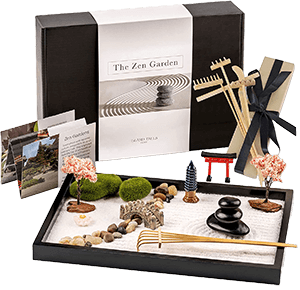
A fully accessorized Japanese-themed mini garden with a miniature ceramic pagoda, a small cherry blossom tree, a wooden bridge, and zen stones arranged in white sand captures the aesthetic of a traditional Japanese stroll garden at desk scale. This is the most narrative of all the mini zen garden styles: each element tells part of a story about place and culture, and arranging them becomes a kind of world-building.
The Island Falls Home Zen Garden Kit is the most well-reviewed version of this design, including all the elements above plus a Shinto torii gate, lotus flower, and moss balls. That said, a DIY version assembled from individual miniature figurines purchased separately often feels more personal than a kit because you choose each piece deliberately. The approach reflects the same thoughtfulness that goes into full-scale Japanese zen garden ideas: every element earns its placement.
Budget: $30 to $80 for a kit or $25 to $60 assembled individually. Best placement: home office, meditation room, gifting.
13. Shadow Box Wall-Mounted Garden
A shallow shadow box frame mounted on a wall, filled with fine sand and a few stones, becomes a mini zen garden that functions as both wall art and tactile mindfulness tool. The frame depth needs to be at least one inch to hold enough sand for raking, and the backing should be painted a matte dark color so the sand pattern reads clearly against it.
This format is less common than tray-based gardens but solves a specific problem: it takes up no desk or shelf space. The raking motion is slightly different from a horizontal tray, requiring more control, which some people find adds an interesting dimension to the practice. Mount it at sitting eye level so you can rake it without standing up from your desk chair.
Budget: $25 to $70 for a shadow box with appropriate depth plus sand and stones. Best placement: home office wall at desk height, meditation room wall, bedroom near the bed.
14. Terrarium Glass Jar Garden
A wide-mouth glass jar, a glass cloche, or a low glass terrarium filled with sand and small stones creates a mini zen garden with a transparent, enclosed quality that feels like looking at a scene under glass. The enclosed format keeps dust out and maintains the arrangement between raking sessions, which suits a coffee table or shelf where the garden is primarily decorative rather than daily-use.
Layering different materials inside a glass jar adds visual depth: a thin layer of charcoal at the bottom for drainage, then coarse gravel, then fine white sand on top. Place two or three small polished stones and a single air plant on the sand surface. The glass walls let you see each layer from the side, which creates an interesting cross-section effect that flat trays can’t replicate.
Budget: $15 to $45. Best placement: coffee table, floating wall shelf, bookshelf display.
15. Himalayan Salt Base Sensory Garden
Coarse pink Himalayan salt used instead of sand creates a mini zen garden with a warmer, more mineral tone and a distinctly different texture under the rake. The crystals are larger than sand, which means rake patterns form more slowly and require more deliberate pressure. The slight resistance in the material creates a more tactile, grounding experience than smooth fine sand.
Pink salt also carries a faint mineral scent and absorbs essential oils extremely well, bridging the sensory gap between a standard garden and the aromatherapy version. Place the salt garden on a matte slate or dark wood tray to complement the warm rose color. Add clear quartz crystals instead of river stones for a mineral-on-mineral arrangement that feels cohesive.
Budget: $15 to $35 for salt, tray, and crystals. Best placement: bathroom shelf, bedside table, meditation space.
16. Mini Water Feature Garden
A small USB-powered recirculating pump in a ceramic dish with river pebbles and a thin layer of water creates a mini zen garden that adds an auditory dimension to the visual one. The sound of water trickling over smooth stones is one of the most reliable sounds for masking office noise and inducing calm, and at desk scale it remains subtle rather than distracting.
The water element references the streams and ponds that appear in traditional Japanese garden design, where water represents adaptability and constant flow. At desk scale, you don’t need more than a teacup-sized bowl: just enough water to submerge the pump and cover the stones slightly. A single floating lotus candle or a small piece of bamboo leaning across the bowl completes the scene without overcrowding it.
Budget: $25 to $70 for a small fountain pump and bowl. Best placement: desk during work hours, meditation space, living room side table.
17. Kids’ Dinosaur or Fantasy Garden
The mini zen garden format is endlessly adaptable for children: replace traditional pagodas and stones with small dinosaur figurines, fairy garden accessories, animal miniatures, or crystals, and you have a version that children actually want to sit and rearrange. The raking and arranging practice is just as meditative for children as it is for adults, and it supports fine motor skill development as a bonus.
Use colored sand to match the theme, green for a dinosaur jungle, purple for a fairy garden, blue for an underwater scene. Keep the figurine count small, three to five pieces maximum, to avoid visual overwhelm and to preserve the reflective quality of the activity. The discipline of choosing what belongs in the tray and what doesn’t is itself a kind of zen practice.
Budget: $15 to $40. Best placement: children’s desk, reading corner, playroom shelf within reach.
18. Driftwood and Pebble Coastal Garden
A piece of naturally weathered driftwood placed diagonally in a tray of fine white sand alongside smooth beach pebbles creates a garden that feels like a coastal landscape seen from above. The irregular surface of driftwood, with its bleached color, cracked texture, and organic curves, contrasts beautifully with the flat expanse of raked sand around it.
Collect driftwood and pebbles from a beach visit to make this version personally meaningful as well as visually interesting. The practice of gathering materials deliberately, choosing each stone for its shape, weight, and color, mirrors the attentive approach that larger zen rock gardens require, as explored in zen rock garden ideas. Even if the garden lives on an office desk far from any coast, the materials carry the memory of where they came from.
Budget: $5 to $20 for a tray if materials are gathered free from nature. Best placement: home office, living room shelf, bathroom counter.
19. Seasonal Holiday Garden
A mini zen garden transitions between seasons with simple swaps of decorative elements while keeping the tray and sand base constant. In winter, add small pinecones, a sprig of evergreen, and snow-white sand. In spring, add a tiny cherry blossom branch or a few dried flower petals. In autumn, arrange small acorns, a leaf skeleton, and warm-toned amber sand.
This approach turns the mini zen garden into a living calendar that marks the passage of time through natural materials. It also gives the raking ritual a seasonal character: certain patterns feel appropriate at certain times of year, the way a winter garden naturally invites slower, more deliberate movement while spring suggests freer, more energetic lines.
Budget: $20 to $40 for the base, with seasonal additions costing very little if materials come from outdoors. Best placement: entryway console table, dining room sideboard, living room windowsill.
20. Upcycled Tin or Picture Frame Garden
A rectangular picture frame with the glass removed and a thin plywood backing added becomes a perfectly proportioned mini zen garden tray. Paint the interior a matte dark color, fill with fine sand, and use the frame’s natural border as the tray wall. The result looks considered rather than improvised because picture frames have inherent visual balance: the proportions are already designed to hold and present something.
Vintage metal cookie tins, low rectangular cake pans, and old wooden cigar boxes work equally well as repurposed tray bases. The upcycled version makes mini zen gardening more accessible to anyone who wants the experience without the cost of a purpose-built tray, and the imperfection of a repurposed container adds a wabi-sabi quality that elevates the result.
Budget: $0 to $15 if repurposing materials already owned. Best placement: desk, kitchen counter, hobby room shelf.
21. Colored Layered Sand Garden
Using two or three colors of fine craft sand in different zones of the same tray creates a mini zen garden with visual complexity that changes as you rake. Blue and white sand next to each other read as ocean meeting shoreline. Black and white create a yin-yang visual that shifts as the rake blends the boundary between zones. Terracotta and cream create a warm, earthy landscape.
The layering technique requires a tray large enough to hold distinct color zones without looking cramped. A 12 by 8 inch tray is the minimum for this to work well. Use a small piece of cardboard as a temporary divider while pouring each color, then remove it carefully to leave a clean edge that raking will gradually soften over time.
Budget: $15 to $35 for colored sand varieties and tray. Best placement: creative workspace, art studio, living room coffee table.
22. Chakra Stone Meditation Garden
Seven chakra stones, each associated with a specific energy center and color, arranged in a line or circle on a white sand base turn a mini zen garden into a meditation object with personal and spiritual meaning. Red jasper, carnelian, citrine, green aventurine, blue agate, lapis lazuli, and amethyst each bring a different visual quality to the arrangement as well as their symbolic associations.
This version suits people who already have a meditation or wellness practice that incorporates crystal work. The raking ritual becomes an opening or closing practice for a meditation session rather than a standalone activity. The BangBangDa Chakra Zen Garden kit packages this concept well, including a chakra bracelet alongside the garden components.
Budget: $25 to $60 depending on stone quality. Best placement: meditation corner, yoga space, bedroom shelf.
23. Bookshelf Long Narrow Garden
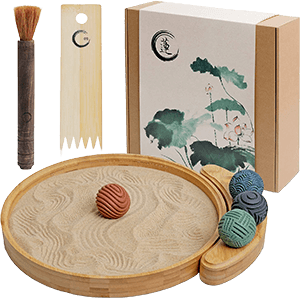
A long, narrow tray, roughly the width of a standard book, fits perfectly alongside books on a shelf and creates a horizontal landscape that draws the eye along its length. This proportion encourages long horizontal rake strokes rather than circular or spiral patterns, which produces a different quality of movement and attention. The garden becomes part of a curated shelf display rather than a standalone object.
Choose a tray in cedar, bamboo, or dark walnut to complement the spine colors of the books around it. Keep the sand content minimal and the stone count to two or three so the tray doesn’t look cluttered at shelf depth. A single small ceramic figure at one end of the long tray gives the landscape a focal point.
Budget: $15 to $45 for a long narrow tray and materials. Best placement: bookshelves, floating wall shelves, mantlepiece.
24. Bathroom Windowsill Garden
A mini zen garden on the bathroom windowsill turns a room that’s often purely functional into a space with a moment of calm. The windowsill placement gives it natural light, which makes the sand pattern and stone surfaces more vivid. A small air plant or a piece of preserved moss alongside the sand adds living greenery to a room that often lacks it.
The bathroom is also a natural environment for the aromatherapy version: adding a few drops of eucalyptus or peppermint oil to the sand complements the clean, refreshing quality of the room and makes the morning raking ritual part of the same sensory routine as the shower. Keep the tray small enough that it doesn’t crowd the windowsill or catch soap splatter during daily use.
Budget: $15 to $35. Best placement: bathroom windowsill, bathroom shelf above towels, beside the sink on a small tray.
25. Coffee Table Centerpiece Garden
A larger mini zen garden, in the 12 by 16 inch range, works well as a coffee table centerpiece that guests can interact with during visits. At this size, the raking space becomes generous enough for complex patterns, and the garden becomes a conversation starter as well as a calming object. Place it on a low riser or wooden board to protect the table surface from sand drift.
A coffee table garden benefits from a more elaborate accessory set: a bridge, a few stones in different sizes, and perhaps a small tree or lantern. The larger scale justifies more decoration because there’s more raking space between the elements. Just avoid overcrowding, the negative space between elements is where the garden breathes, which connects to the same principle of spacious restraint found in zen garden ideas for outdoor spaces.
Budget: $35 to $80 for a larger kit or materials. Best placement: living room coffee table, meditation room floor, dining room sideboard.
26. Nightstand Bedside Garden
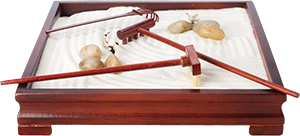
A mini zen garden on the nightstand, raked for a few minutes before sleep, is one of the most effective uses of the format. The slow, deliberate raking motion occupies the hands and the visual field with something calm and non-stimulating, which helps the mind disengage from the day’s activity more naturally than staring at a screen. The glow-in-the-dark version works especially well here, or any garden with a small battery-powered ambient light nearby.
Keep the nightstand garden small: a 6 by 8 inch tray with just two stones and a simple rake is enough. The goal is a ritual that takes two to three minutes, not an activity that becomes another project to manage before bed. Smooth, consistent horizontal lines across the sand from left to right is all the pattern you need.
Budget: $15 to $35. Best placement: bedside table, dressing table, reading nook beside a chair.
27. DIY Painted Wood Tray Garden From Scratch
Building a mini zen garden tray from scratch with a few pieces of lumber, wood glue, and a saw produces a container that’s exactly the size you want, in exactly the finish you choose, at a fraction of the cost of a purchased tray. Cut four pieces of 1-by-2 pine lumber to your desired dimensions, glue and nail them into a rectangle, attach a thin plywood base, sand the edges smooth, and finish with matte black, natural wood oil, or white paint.
The DIY build adds a dimension of intentionality to the garden that purchased trays can’t fully replicate: you made the container, you chose the finish, you measured the space it’s going into. That level of ownership changes how the garden feels to use daily, connecting the physical object to the care and attention behind it. Add a coat of beeswax or tung oil to a natural wood finish to protect it from sand abrasion over time.
Budget: $8 to $20 for lumber, glue, and finish plus $10 to $20 for sand and stones. Best placement: wherever you build it for, since it’s made to your exact specifications.
Design Tips for Mini Zen Gardens
The most repeated mistake in mini zen garden design is adding too many elements. Three well-chosen stones, properly spaced, are more powerful than seven crowding the tray. The sand between the stones is as much a part of the design as the stones themselves. Negative space is what makes the raked pattern visible, and it’s what creates the breathing room the garden is supposed to provide.
Asymmetry is a core principle of Japanese design philosophy and applies directly to stone placement. Avoid placing stones in a line, at equal distances, or at the geometric center of the tray. Instead, use odd numbers of stones (one, three, or five) and arrange them so no two are at the same distance from each other or from the tray edge.
Match the container material to the environment where it will live. A light bamboo tray suits a bright, plant-forward room. A matte concrete tray suits a modern minimalist space. A dark lacquered wood tray suits a japandi or traditional Japanese aesthetic. The tray reads as part of the room, not just as a container for sand, so it should feel intentional in its context.
Rake tool selection matters more than most beginners expect. A rake with narrow tines makes fine, delicate lines; wider tines produce bolder, more sweeping patterns. Having two rake widths available doubles the range of patterns you can create without adding any visual complexity to the garden itself.
Common Mistakes to Avoid With Mini Zen Gardens
Overfilling the tray with sand makes raking difficult and creates a spill risk every time the garden is moved. Sand should fill the tray to about half the wall height, leaving enough clearance that raking doesn’t push grains over the edge. A thin, even sand layer is harder to fill but easier to maintain.
Buying the cheapest sand available leads to frustration: coarse or gritty sand doesn’t hold patterns, clogs rake tines, and looks dusty rather than clean. Fine-grain white quartz or decorative craft sand costs only slightly more and performs dramatically better. If pattern retention is important to you, the sand quality is worth prioritizing above almost everything else.
Placing a mini zen garden somewhere inconvenient means it never gets used. A garden that requires standing up, walking across the room, or clearing space before you can reach it stops being a daily practice within a week. The placement decision is as important as any design choice: put the garden where you already spend time and already tend to feel stressed.
Leaving the garden uncovered in a dusty environment fills the sand with fine particles that blur the rake lines and eventually turn the white sand gray. A simple piece of linen fabric draped over the tray between sessions keeps dust out without completely hiding the garden from view. This is especially important in kitchens and shared offices where airborne particles accumulate quickly.
Raking too fast undermines the whole point. The meditative benefit of a mini zen garden comes from the pace of the raking, not from the pattern produced. Slow the stroke down to the point where you can watch the sand move grain by grain in front of the rake. That’s when the mind actually quiets. A pattern raked in ten seconds provides almost none of the calming effect of the same pattern raked in two minutes.
Check These Related Ideas
A mini zen garden doesn’t ask for much. A small tray, a handful of sand, a few stones, and two minutes you might otherwise spend scrolling. The return on that investment, a genuine moment of slowing down in the middle of a day that rarely offers one, is disproportionately large for something so simple.
Pick the idea from this list that fits the space you’re thinking of and the materials you can find easily. Start there. The garden doesn’t need to be perfect on day one, and it won’t be. That’s exactly the point.
Frequently Asked Questions
What is a mini zen garden?
A mini zen garden is a small-scale Japanese rock garden that fits on a desk, shelf, or table. It typically includes a shallow tray, fine sand or gravel, a few smooth stones, and a small rake used to create patterns for stress relief and mindfulness.
How do you make a mini zen garden?
Choose a shallow tray or container, fill it halfway with fine sand, place 1 to 3 smooth stones asymmetrically, and add a small rake. Use the rake to draw slow patterns in the sand during breaks or quiet moments.
What can I use instead of sand in a mini zen garden?
Good alternatives include fine gravel, small river pebbles, coarse Himalayan salt, crushed white stone, moss, or colored craft sand. Each creates a different texture and aesthetic suited to different styles.
Where should I place a mini zen garden?
Place it wherever you spend time and tend to feel stressed: a desk, bedside table, bathroom shelf, or coffee table. Placement within easy arm’s reach during daily routines ensures it actually gets used.
How do I maintain a mini zen garden?
Rake the sand daily or every few days to keep patterns fresh. Cover the tray with a cloth between sessions to prevent dust buildup. Replace sand if it becomes discolored or stops holding patterns cleanly.
Can mini zen gardens help with stress and anxiety?
Many people find the slow, repetitive motion of raking sand genuinely calming. The focused attention required to draw clean lines gives the mind a simple task to rest on, similar to other mindfulness techniques.
How much does a mini zen garden cost?
Budget options start at $10 to $20 for basic DIY materials or entry-level kits. Mid-range kits with more accessories run $30 to $60. Premium handcrafted versions can reach $80 to $100 or more.