25 Zen Kitchen Ideas That Make Cooking Feel Calm
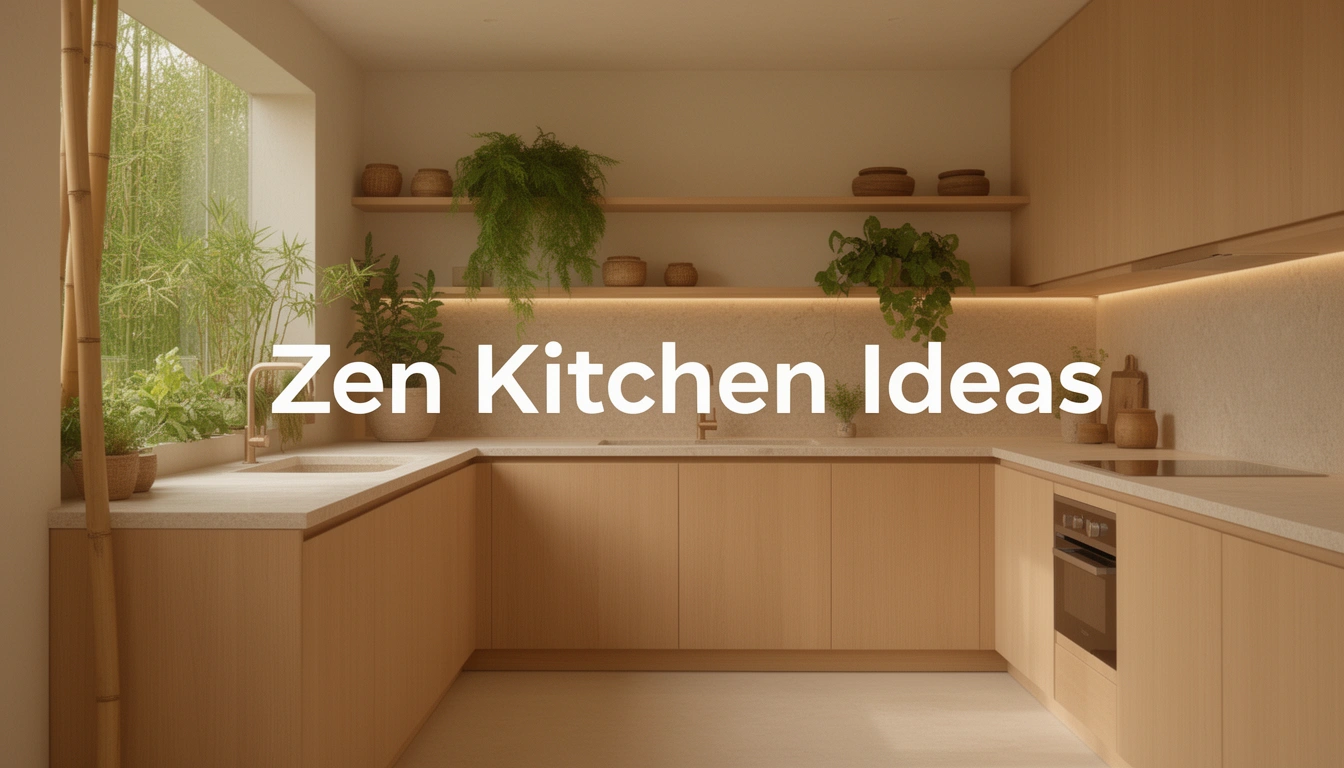
Your kitchen is the most active room in your house, but that doesn’t mean it has to feel that way. Most kitchens accumulate appliances on every surface, random gadgets stuffed into drawers, and a visual busyness that makes even a quick cup of tea feel like an event. The result is a space that adds to your mental load instead of relieving it.
Zen kitchen ideas work differently. Rooted in Japanese minimalism and the principle that every object should earn its place, a zen-inspired kitchen strips away visual noise and replaces it with natural materials, intentional storage, and a layout that lets you breathe. Whether you’re remodeling from scratch or just refreshing what you already have, these ideas show how small, deliberate choices create a kitchen that genuinely feels good to be in.
Below are 25 zen kitchen ideas covering everything from cabinetry and countertops to lighting, plants, and texture, with realistic budget guidance and practical notes on how to implement each one in a real home.
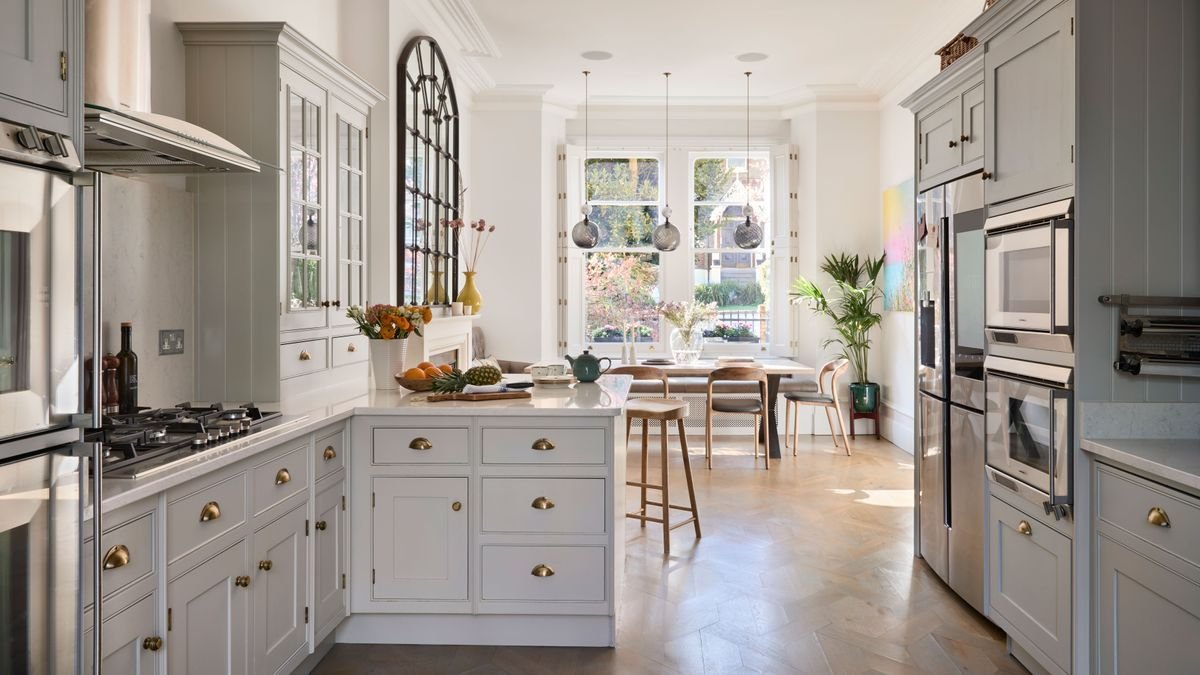
1. Flat-Front Cabinets in Light Oak or White Ash
The cabinet style you choose sets the entire tone for a zen kitchen. Flat-front, handleless cabinetry in light oak, white ash, or bamboo-look finishes eliminates the visual busyness of raised panels and ornate hardware. The grain of the wood becomes the only decoration, which is exactly the point.
This look works best when the upper and lower cabinets share the same tone, creating one continuous visual field rather than two separate zones fighting for attention. Pair with integrated pulls or touch-latch mechanisms to keep surfaces fully clean.
Best for modern zen, japandi, and wabi-sabi kitchens. Budget: $3,000 to $12,000+ depending on cabinet size and whether you choose solid wood or laminate with wood-veneer doors.
2. Floating Wood Shelves Instead of Upper Cabinets
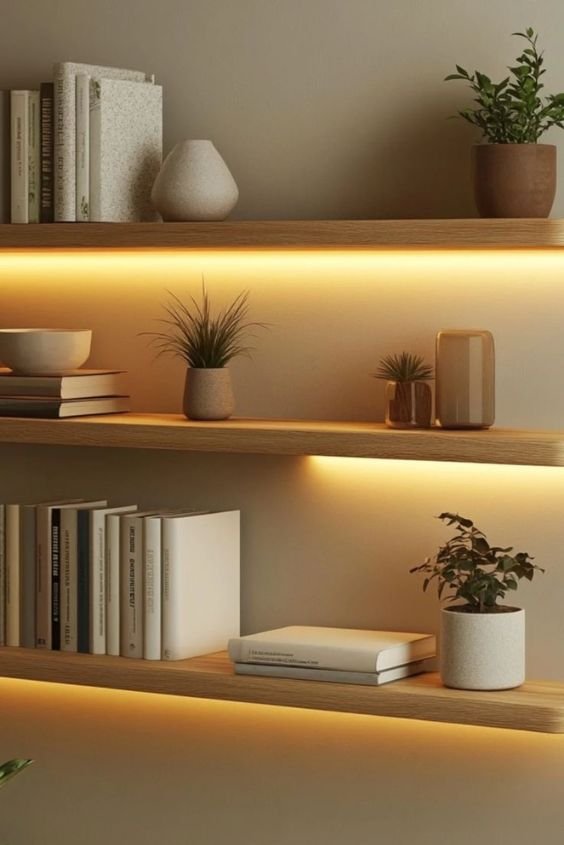
Upper cabinets can make a kitchen feel enclosed and heavy. Swapping them for floating wood shelves opens the wall, lets natural light travel deeper into the space, and forces you to display only what you actually use. That’s one of the most effective zen kitchen strategies there is: visible storage that demands curation.
Choose 2-inch thick solid walnut, oak, or cedar shelves with simple metal brackets. Keep only a few pieces on each shelf: a set of matching ceramic bowls, two or three glasses, a single small plant. The restraint is the design.
Style compatibility: minimalist, japandi, cottagecore, farmhouse. Budget: $200 to $800 for a pair of shelves installed.
3. Seamlessly Integrated Appliances
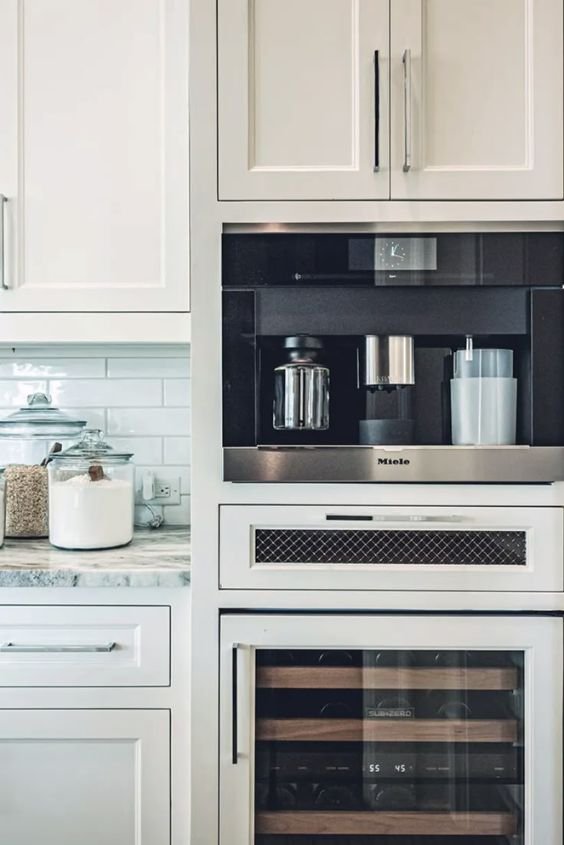
One of the fastest ways to disrupt a calm kitchen is appliances that announce themselves. Refrigerators with panel-ready doors, dishwashers hidden behind cabinetry fronts, and built-in ovens flush with the wall all contribute to the same goal: making the technology invisible so the natural materials take center stage.
This doesn’t require a full luxury renovation. Panel-ready dishwasher kits cost $150 to $400 and work with most standard cabinet systems. Even moving a countertop toaster oven into a deep drawer or appliance garage cuts visual clutter significantly, which pairs well with zen rock garden ideas that apply the same principle of removing excess to the outdoors.
Budget: $150 to $5,000+ depending on whether you’re adding panels to existing appliances or replacing units with panel-ready models.
4. Hidden Storage Cabinets for Counter Clarity
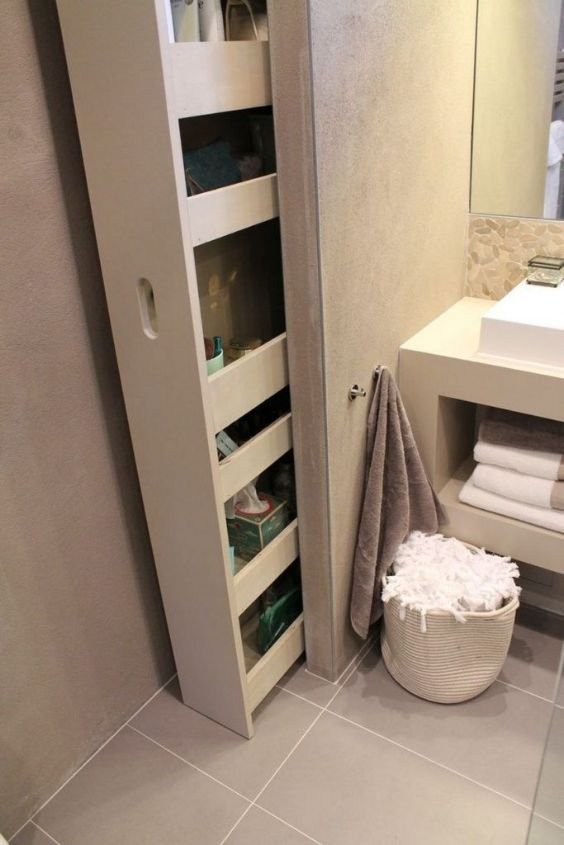
Clear countertops are the single most powerful step toward a zen kitchen. When surfaces stay empty, the kitchen breathes. The challenge is making all the stuff you use daily disappear without making it hard to find. That’s where purposeful hidden storage comes in.
Think floor-to-ceiling pantry cabinets with soft-close doors, appliance garages with tambour or flap doors, and deep base drawers organized with internal dividers. Everything from the blender to the coffee maker gets a home behind a door. The countertop holds nothing but a single cutting board and perhaps a small ceramic plant.
Compatible with every zen style from japandi to wabi-sabi. Budget: $500 to $4,000 depending on scope.
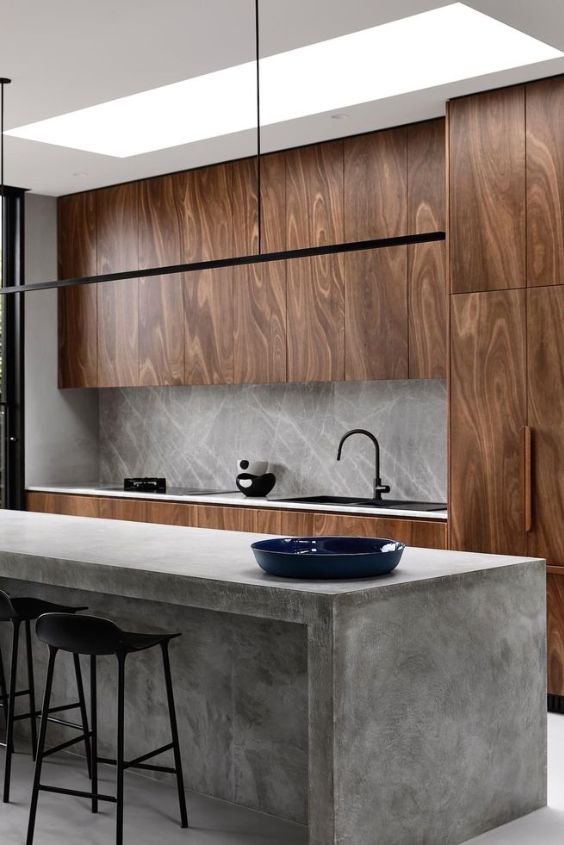
5. Stone or Honed Concrete Countertops
Polished granite is beautiful, but honed finishes in quartzite, soapstone, or concrete feel more in line with zen aesthetics. The matte surface absorbs light rather than reflecting it, giving the kitchen a quieter, more grounded quality. Soapstone develops a natural patina over time, which aligns well with wabi-sabi, the Japanese appreciation for imperfect beauty.
Concrete countertops are a good mid-range option that can be tinted in warm sand, charcoal, or pale sage tones. They’re cast on-site and can wrap a sink for a seamless, minimal look. Quartz in a concrete or linen tone gives a similar effect with easier maintenance, which makes it a practical choice for busy households, similar to the low-maintenance philosophy behind Japanese zen garden ideas.
Budget: $40 to $120 per square foot installed.
6. Bamboo Accents and Utensil Storage
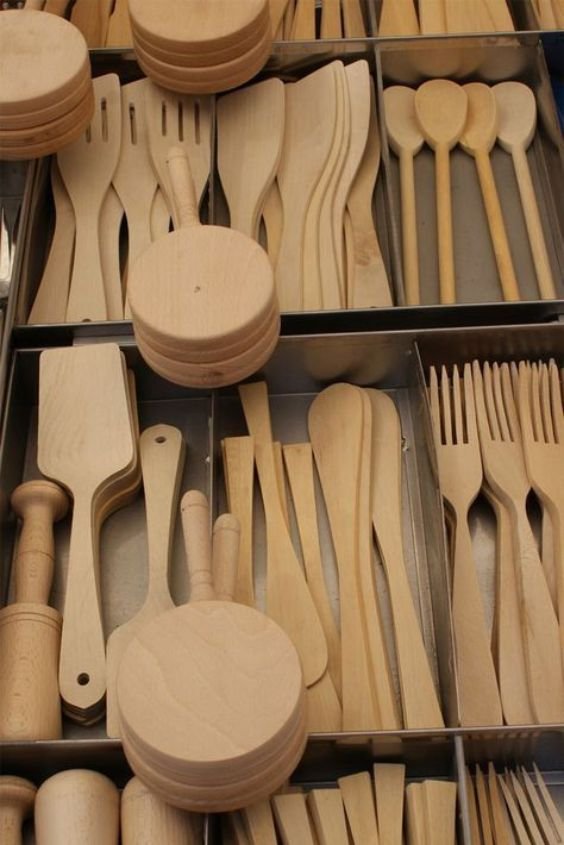
Bamboo is one of the most recognizable materials in Japanese interior design, and it brings an instant organic warmth to any kitchen. Bamboo utensil organizers, cutting boards, drawer dividers, and dish drying racks replace plastic equivalents with something that looks considered and feels natural in the hand.
A set of bamboo canisters on a single shelf, holding coffee, tea, and sugar, can replace several mismatched containers and immediately tidy a counter zone. Bamboo grows fast and requires minimal processing, making it one of the more sustainable material choices in the kitchen space.
Budget: $20 to $200 for bamboo accessories. Bamboo flooring or cabinetry ranges from $2,000 to $8,000+.
7. A Neutral Earth Tone Palette
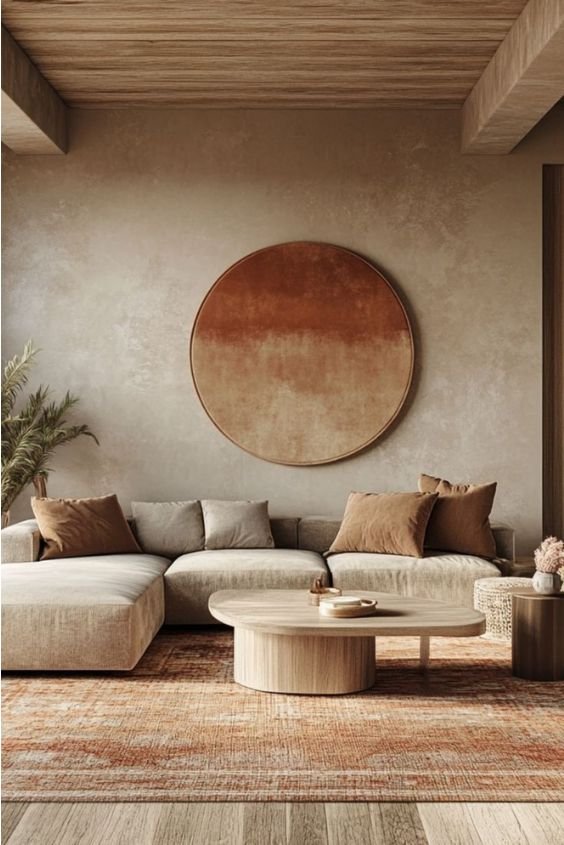
Zen kitchen color palettes stay close to nature: warm whites, linen, sandy beige, warm gray, and soft sage. These tones read as calm rather than cold, especially when paired with wood grain and natural textures. The wall color, cabinetry, and countertop should feel like one cohesive temperature rather than competing shades.
A common mistake is going too stark white. Pure white reflects light harshly and can feel clinical rather than serene. Warmer off-whites like Benjamin Moore White Dove or Sherwin-Williams Accessible Beige have enough warmth to feel grounded. Add a soft sage or dusty olive on one accent wall or on lower cabinetry for depth without tension.
Budget: $100 to $600 for paint. Cabinetry refinishing in new tones runs $1,500 to $5,000.
8. Matte Black or Brushed Brass Hardware
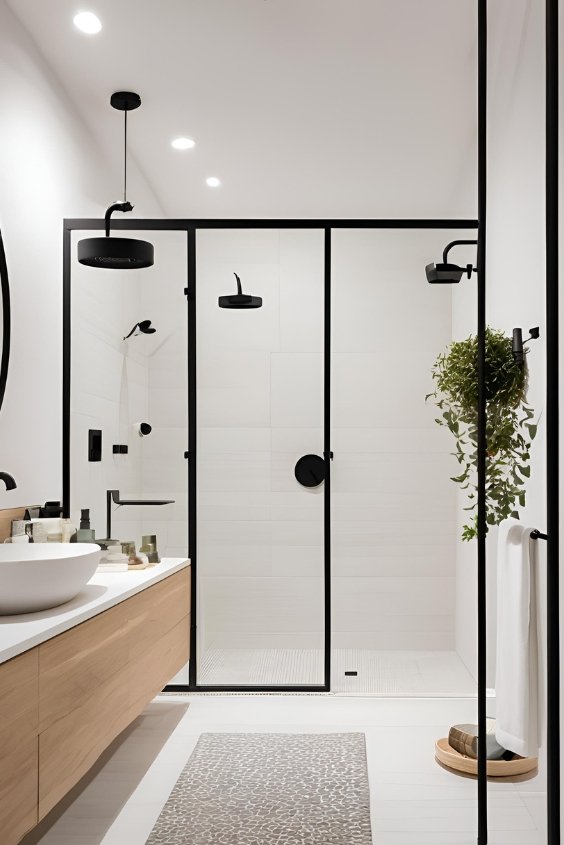
Hardware is a small detail that shapes the entire feel of a kitchen. Matte black pulls on light wood cabinetry create a japandi-inspired contrast that feels intentional and modern. Brushed brass or unlacquered brass on warm-toned wood gives a softer, more earthy result. Both finishes avoid the cold shine of chrome or stainless, which can work against a zen aesthetic.
For true minimalism, hardware-free flat-front drawers with push-to-open mechanisms are the cleanest option. But for those who want a tactile element, a single clean bar pull in matte black reads beautifully against white ash or light maple grain.
Budget: $3 to $25 per pull, depending on finish and brand. A full kitchen might use 20 to 40 pulls.
9. Under-Cabinet Warm Lighting
Lighting does more for a zen kitchen than almost any furniture choice. Warm LED strips installed under upper cabinets or floating shelves cast a soft glow across the countertop that feels like late afternoon light. It makes the kitchen feel inhabited and calm rather than bright and functional.
Choose LEDs in the 2700K to 3000K color temperature range. Anything cooler reads as white or bluish, which works against the warm, grounded feel zen kitchens aim for. Dimmable switches are worth the upgrade as they let you shift the kitchen from task lighting during meal prep to ambient lighting during dinner.
Budget: $50 to $400 for LED strip kits plus installation. Smart dimmable versions run $150 to $600.
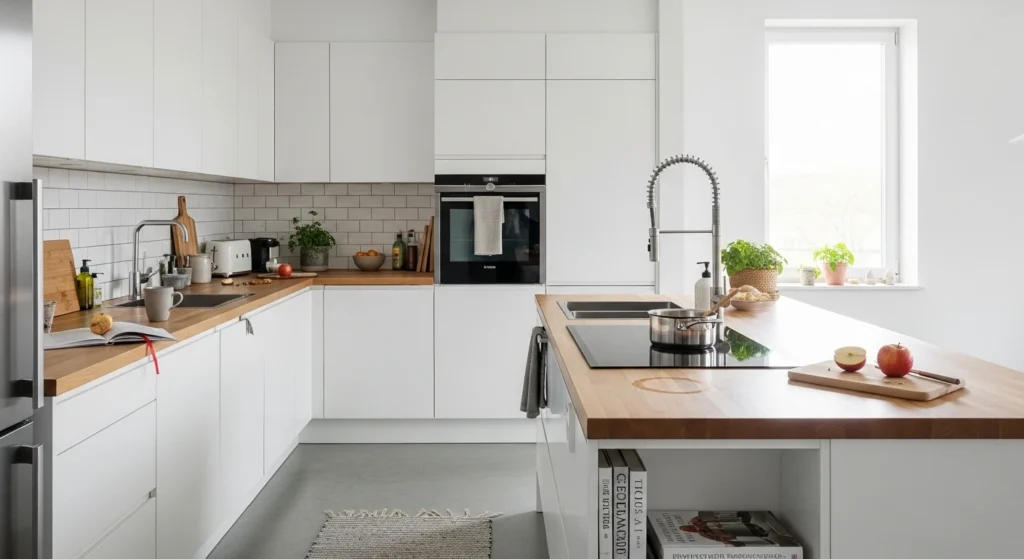
10. Maximize Natural Light With Minimal Window Treatments
Natural light is a non-negotiable in zen kitchen design. A kitchen flooded with morning light feels completely different from the same kitchen with blinds half-closed. Swap heavy curtains for sheer linen panels, bamboo roller shades, or remove window treatments entirely if privacy isn’t a concern.
If the window is above a sink or faces a garden, keep the sill completely clear, no bottles of dish soap, no small appliances. The view becomes the decor. For kitchens with limited natural light, a skylight or light tube can be transformative, bringing in the kind of soft, diffused light that no artificial fixture fully replicates.
Budget: Sheer linen panels cost $30 to $150 per window. Skylights run $800 to $3,000 installed.
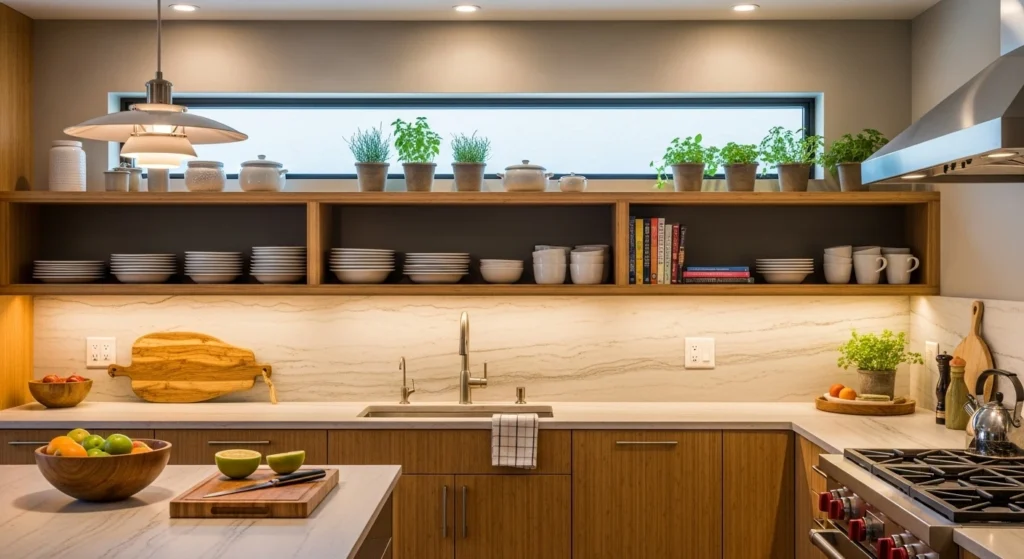
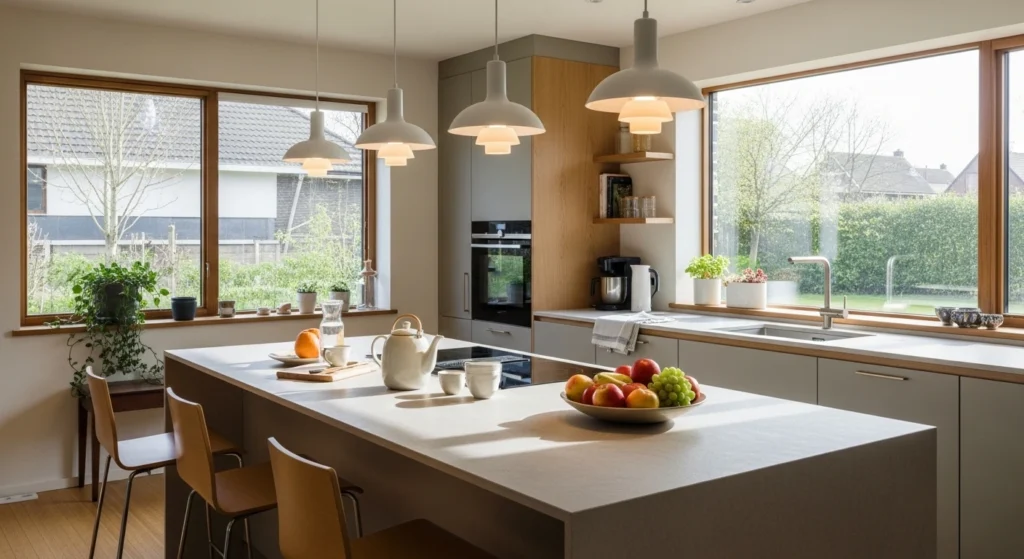
11. A Japandi-Style Minimalist Island
A kitchen island doesn’t have to be a statement piece. In japandi and zen kitchen design, the island is quiet: a simple rectangle in warm wood or honed stone, with no overhead pendant cluster drawing the eye upward. One pendant in a matte ceramic or woven fiber shade is enough.
Keep the island surface clear except for a single large wooden bowl or a small ceramic vase with dried grass or pampas. Under the island, closed storage or a simple shelf holding a few cookbooks adds function without visual chaos. Pair bar stools in natural rattan or light oak to complete the look.
Budget: $1,200 to $6,000 for a custom or semi-custom island, depending on material and size.
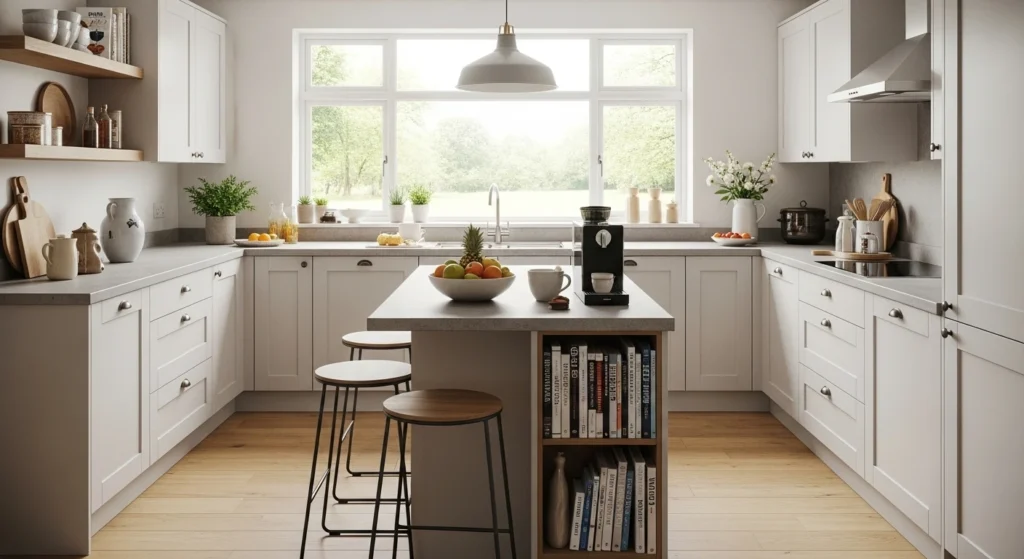
12. Indoor Herb Garden on a Windowsill
Nothing connects a kitchen to nature as directly as living plants. A row of small terracotta pots on the windowsill holding basil, rosemary, mint, and thyme brings green into the space, improves air quality, and makes cooking feel more sensory and intentional. It’s the kitchen equivalent of the moss and bamboo elements used in zen garden ideas outdoors.
Use matching pots in terracotta, matte white, or unglazed stoneware rather than mismatched plastic containers. Keep the grouping small, three to five plants, and replace any that look untidy. A healthy, curated plant grouping adds life; a struggling, overgrown one adds clutter.
Budget: $30 to $100 for pots and starter plants. Ongoing cost is minimal.
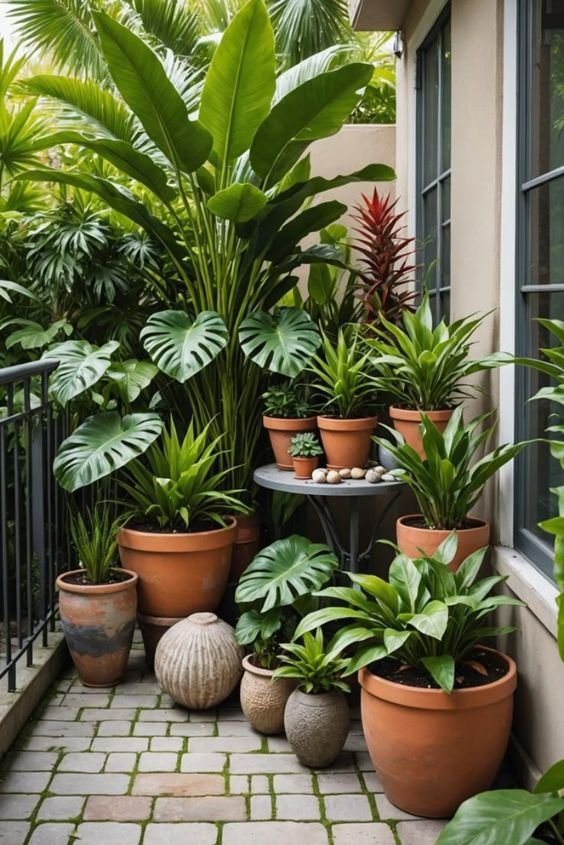
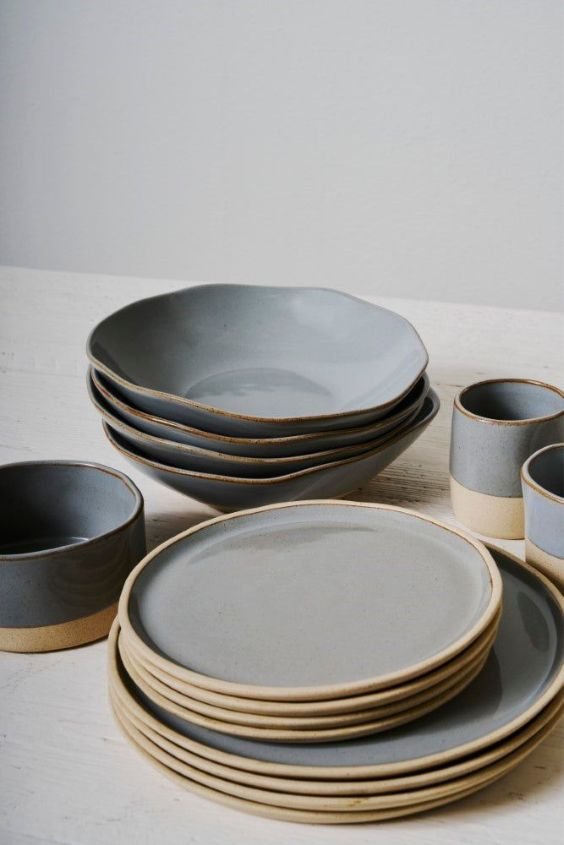
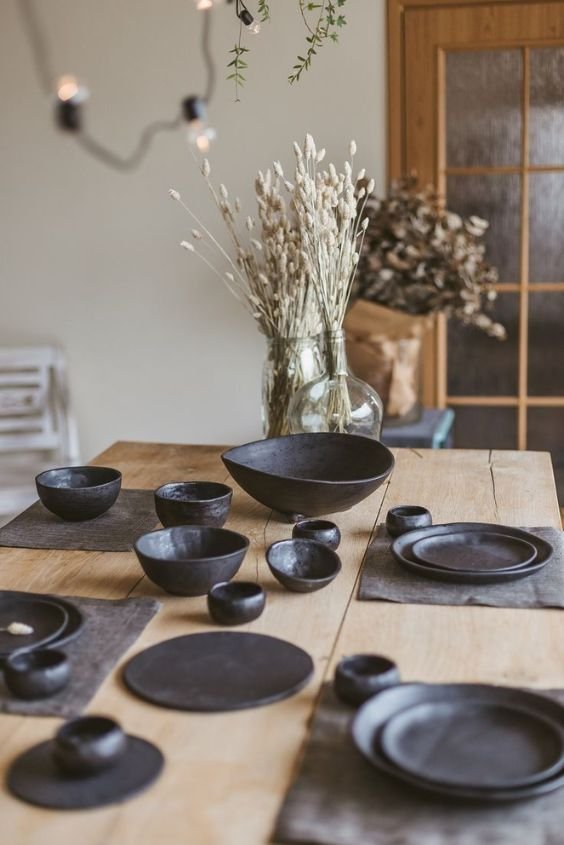
13. Wabi-Sabi Ceramic Dishware on Display
Wabi-sabi is the Japanese aesthetic of finding beauty in imperfection and natural aging. In a zen kitchen, this often means displaying handmade ceramic bowls, plates, and mugs that have slight variations in glaze, texture, or form. These pieces look like they belong in the kitchen rather than like decorative objects placed there for effect.
A row of three matching bowls on a floating shelf, a single handmade mug next to the coffee maker, a ceramic pitcher holding wooden utensils by the stove: these small arrangements give the kitchen a lived-in warmth that feels both personal and serene. Look for pieces from local ceramic artists or Japanese import stores for the most authentic textures.
Budget: $20 to $300 per piece depending on maker. A starter set of four to six pieces runs $80 to $250.
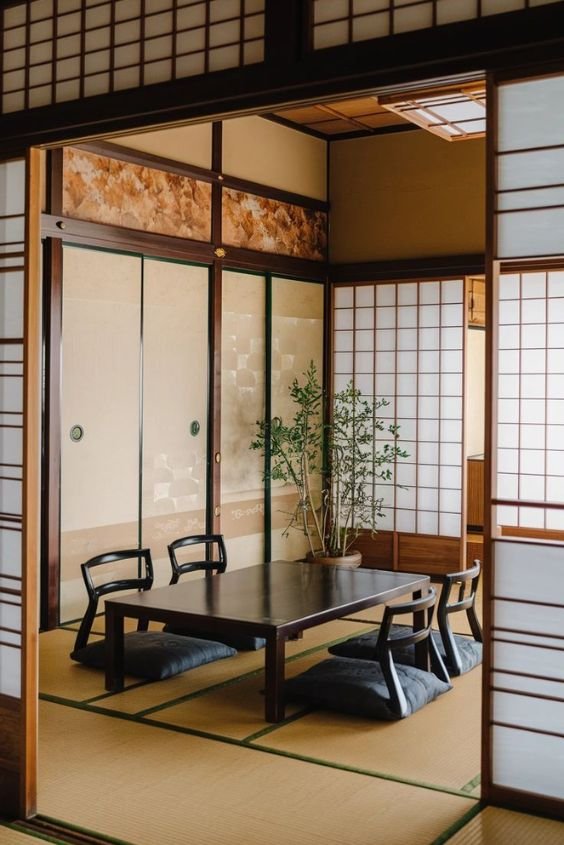
14. Shoji-Inspired Sliding Pantry Doors
Shoji screens, the translucent paper-and-wood sliding doors used in traditional Japanese architecture, translate beautifully into kitchen design. A pantry fitted with shoji-style sliding doors lets light pass through while hiding the contents, maintaining the visual calm of a closed surface with the warmth of a natural material.
Modern interpretations use rice paper laminate panels in aluminum or light wood frames. They work as pantry doors, cabinet fronts covering open shelving, or even as a divider between a kitchen and a dining area. The horizontal sliding motion requires no swing clearance, which helps in tighter kitchens where door swing eats into walkway space.
Budget: $300 to $1,200 per door panel, depending on size and material.
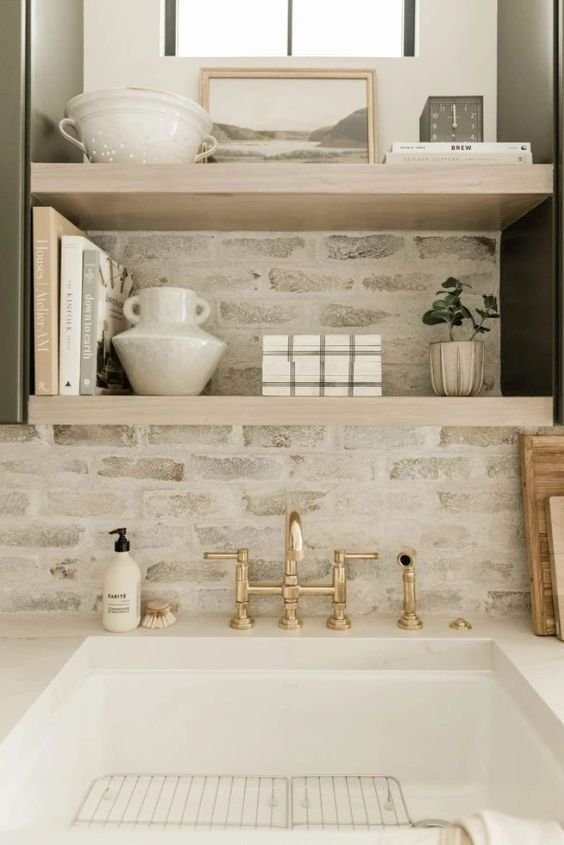
15. Natural Stone Tile Backsplash
A stone backsplash grounds a kitchen in the same way that moss-covered rocks anchor a Japanese garden. Choose slate, travertine, limestone, or soapstone tile in earthy tones: warm beige, soft gray, sandy brown, or pale green. The variation in natural stone adds texture without pattern, which keeps the wall interesting without becoming busy.
Avoid highly polished stone for a zen kitchen. Honed or tumbled finishes absorb light better and feel more raw and organic. A simple stacked or running bond layout lets the material speak without the grout lines becoming a design element in themselves.
Budget: $8 to $40 per square foot for stone tile. A standard backsplash might run $400 to $1,200 installed.
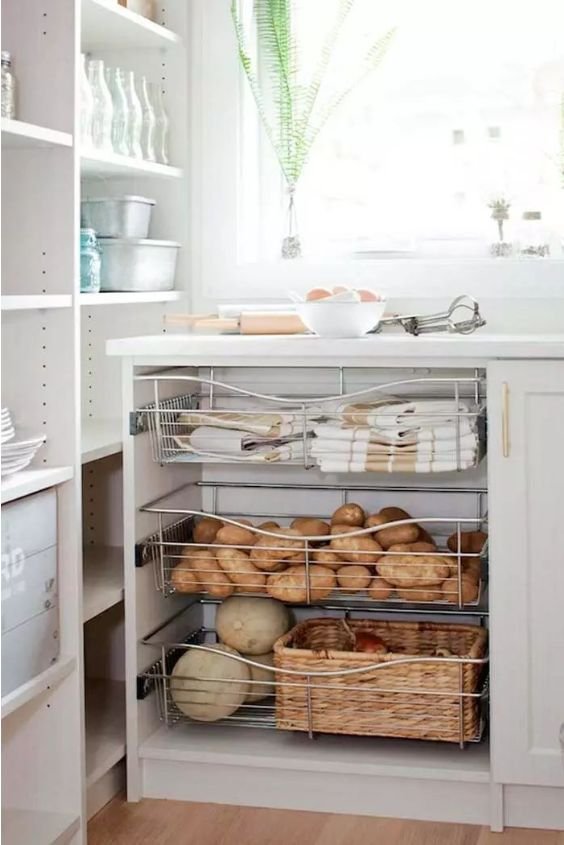
16. Deep Pull-Out Drawers Instead of Base Cabinets
Standard base cabinets with swinging doors create dead zones in the back corners where cookware goes to live and die. Deep pull-out drawers eliminate this problem entirely. You can see and reach everything in one motion, which makes cooking more efficient and keeps the kitchen from accumulating hidden clutter.
Configure drawers in three depths: shallow drawers for cutlery and small tools, medium drawers for plates and bowls, and deep lower drawers for pots and pans. Internal bamboo or wood dividers keep everything visible and separated. This type of organization reflects the zen principle that functional efficiency and visual calm are the same goal, not competing priorities.
Budget: $200 to $600 per drawer cabinet module, depending on hardware and material.
17. A Zen Tea Corner or Mindful Beverage Station
A small, dedicated tea corner turns a routine task into a moment of intentional calm. It could be one shelf above a corner counter holding a Japanese cast iron tetsubin teapot, a small bamboo tea tray, a canister of loose leaf tea, and a single ceramic cup. Everything in its place, nothing extra.
This principle of creating a mindful ritual zone within the kitchen is central to zen living. You don’t need a coffee bar with four different machines and twenty pod varieties. One good kettle, two or three teas you love, and a beautiful cup you look forward to using every morning: that’s the zen version. It’s also a naturally calm anchor point in a kitchen that might otherwise feel transactional.
Budget: $50 to $400 for a curated tea station setup.
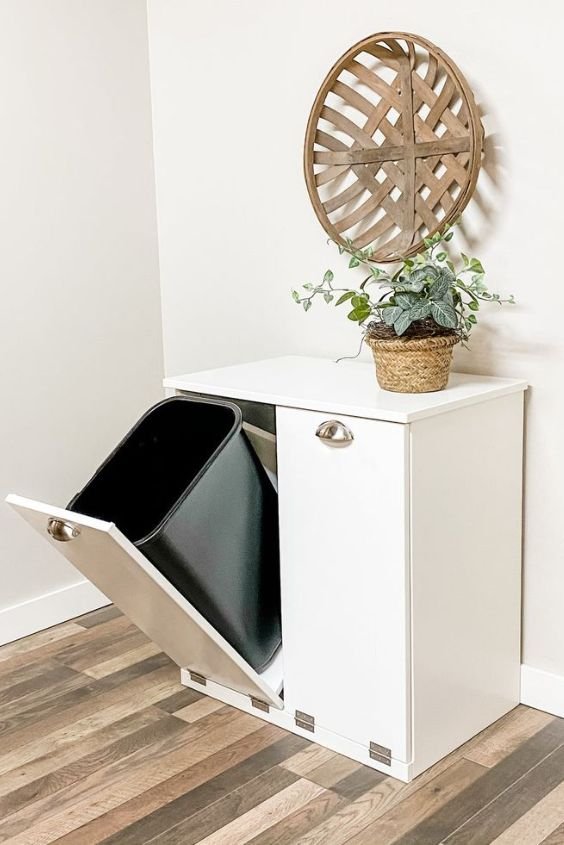
18. Integrated Hidden Trash and Recycling
A visible trash bin is one of the most common visual disruptions in an otherwise calm kitchen. A cabinet-integrated pull-out waste and recycling station hides bins entirely, keeps the floor clear, and eliminates the visual of a black plastic bag peeking out under the counter.
Dual-compartment models handle trash and recycling in a single cabinet. Some triple-compartment systems add compost as a third bin. The result is a cleaner floor, no bin to move when mopping, and one less object occupying counter or floor space. It pairs well with zeninhome.net’s broader approach to home design: removing what doesn’t serve you.
Budget: $80 to $400 for the pull-out unit. Cabinet modifications may add $200 to $500 if done by a cabinetmaker.
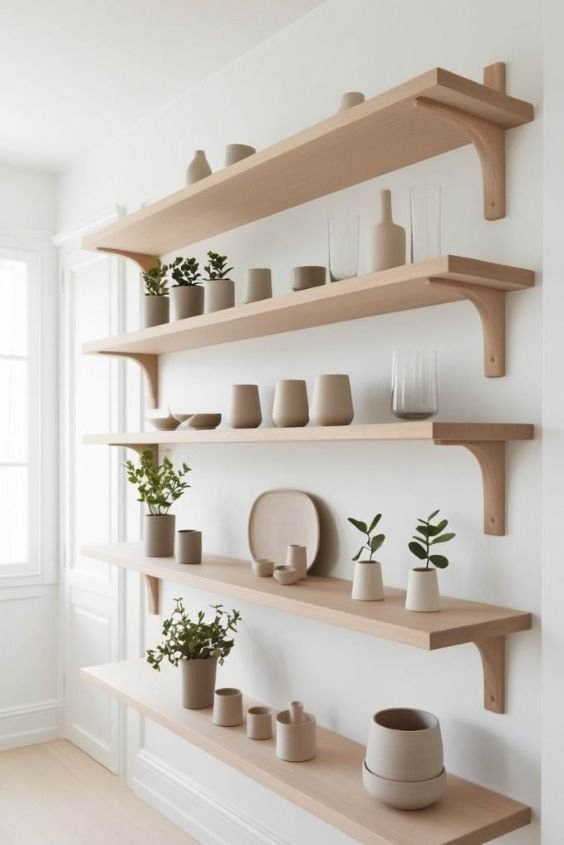
19. Minimal Open Shelving Styled With Restraint
Open shelving works in a zen kitchen only when it’s curated aggressively. The goal isn’t to display everything you own, it’s to display the things that are beautiful enough and used frequently enough to deserve a visible spot. That’s a much shorter list than most kitchens work with.
A single shelf above the counter holding matching oil and vinegar bottles, two or three bowls, and a small plant is more effective than three shelves packed with random items. Edit ruthlessly. Remove anything that’s chipped, mismatched in color, or rarely used. The shelf should look like it was styled, not like it accumulated.
Budget: $50 to $300 per shelf depending on material and bracket style.
20. Linen or Jute Kitchen Textiles
Dish towels, placemats, and oven mitts are functional but often introduce color conflicts that disrupt a calm palette. Switching to linen or jute textiles in undyed or natural tones immediately softens the kitchen and brings in an organic texture that feels consistent with bamboo, stone, and wood surfaces.
Linen washed in natural light brightens slightly over time, which gives it a wabi-sabi quality: slightly different each wash, but always beautiful. A set of four matching linen tea towels draped over the oven handle or folded neatly beside the sink costs almost nothing and makes the kitchen feel immediately more considered.
Budget: $20 to $80 for a set of linen kitchen textiles.
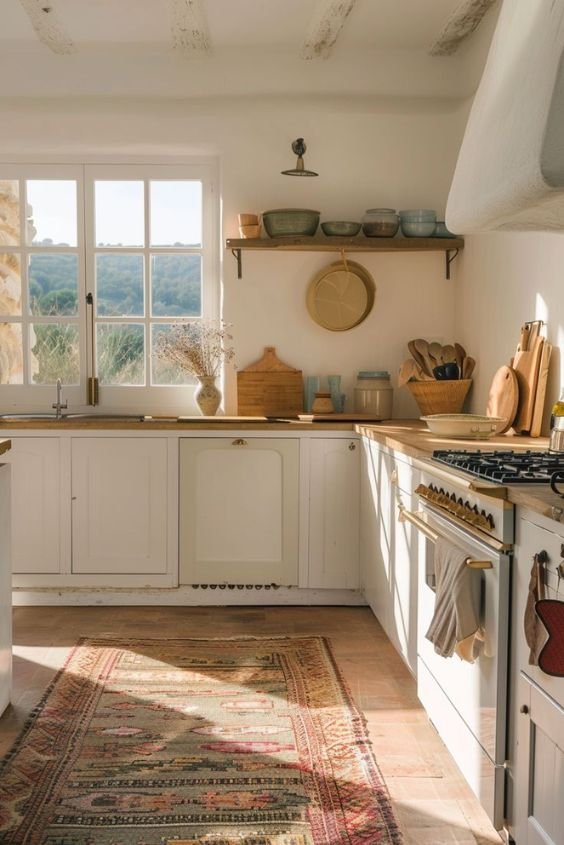
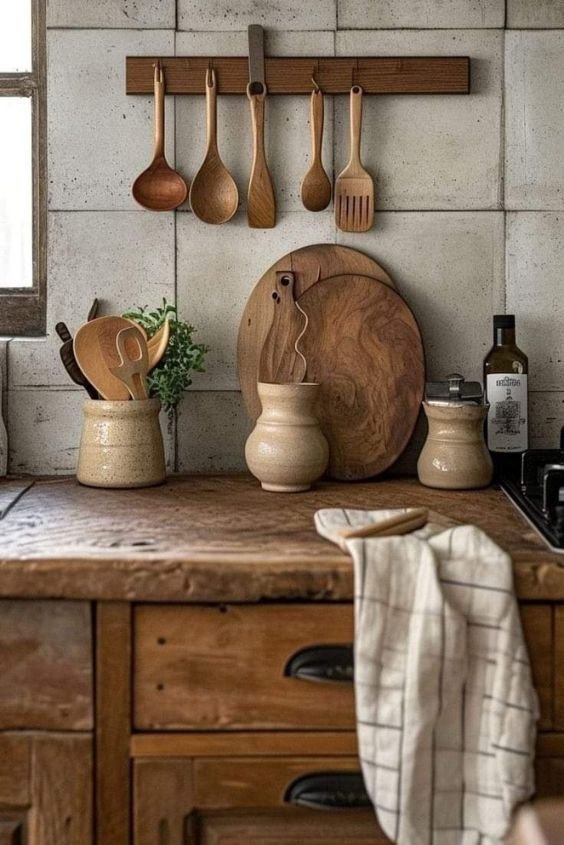
21. Wooden Cutting Boards as Wall Art
A collection of three or four wooden cutting boards in different shapes, hung on a wall or leaned against a backsplash, functions as art while remaining entirely functional. Choose boards in walnut, maple, or acacia for their contrasting grain patterns. The warm brown tones work naturally against white or sage walls.
This is a low-cost, high-impact idea that adds texture and warmth to a flat surface without introducing anything that doesn’t belong in a kitchen. Arrange them in a loose, slightly asymmetric group rather than a rigid grid. The asymmetry references the natural, unforced arrangements found in Japanese ikebana and rock garden design.
Budget: $15 to $80 per board. A set of three quality boards runs $60 to $200.
22. Soft Green or Sage Accent Wall
Soft sage, dusty green, or muted olive on one kitchen wall adds depth to an otherwise neutral palette without disrupting the calm. These tones read as natural rather than bold, evoking the quiet presence of moss, pine, or bamboo. They pair beautifully with warm wood cabinetry and stone countertops.
Paint just one wall, typically the one behind open shelving or the wall furthest from the main light source. This creates a soft focal point that anchors the room without making the kitchen feel smaller. Farrow and Ball’s Mizzle, Sage by Benjamin Moore, or Studio Green are popular choices that align with zen aesthetics.
Budget: $80 to $300 for a single accent wall including paint and supplies.
23. Streamlined Vent Hood in Plaster or Wood
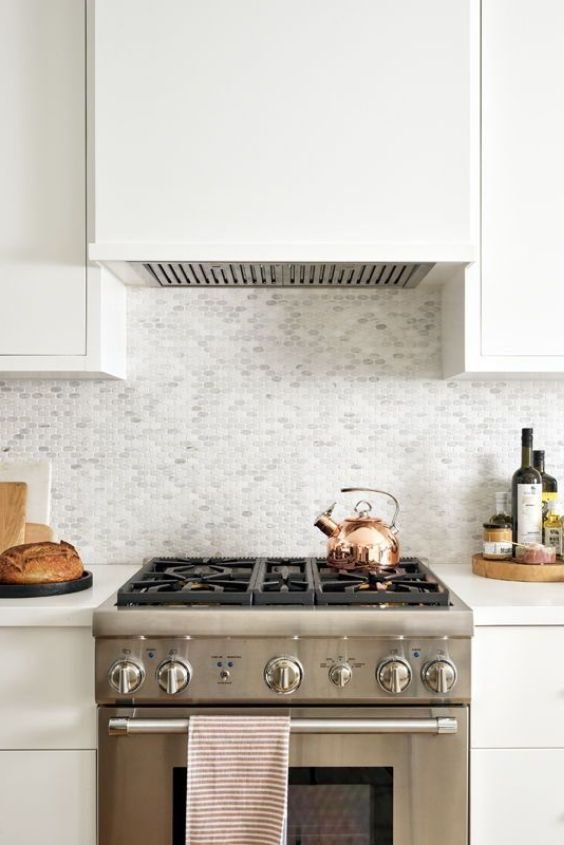
The range hood is often the most visually dominant element in a kitchen. Standard stainless steel hoods draw attention to themselves in a way that works against a calm aesthetic. A plastered hood in warm white or linen, or one clad in horizontal cedar or oak slats, becomes a soft architectural element rather than a statement appliance.
Plaster hoods integrate into the wall and ceiling with no visible edges, giving the kitchen a seamlessly built-in quality. Wood-clad hoods work especially well in japandi kitchens where the wood grain should appear in multiple places rather than only on the floor or a single shelf.
Budget: $800 to $4,000 for a custom plastered or wood-clad hood, including ventilation.
24. Natural Fiber Baskets for Counter Organization
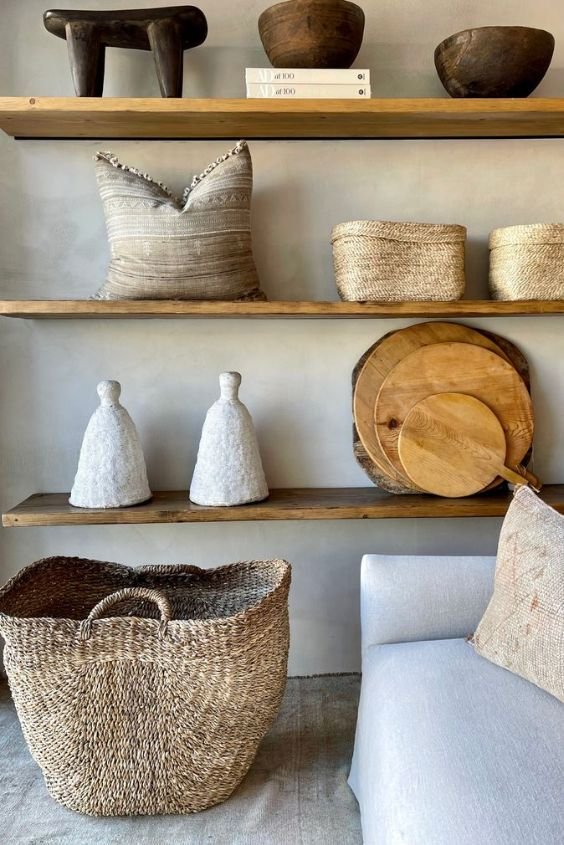
Seagrass, rattan, wicker, and woven jute baskets on open shelves or inside cabinets add organic texture while keeping grouped items tidy. A small seagrass basket holding bread on the counter, or a rattan tray corralling oils and vinegars near the stove, creates structure without rigidity.
The woven texture adds tactile warmth that smooth surfaces like stone and lacquered cabinets can’t provide on their own. It’s also one of the most budget-friendly ways to bring natural material diversity into a kitchen without any renovation work at all.
Budget: $10 to $80 per basket depending on size and material.
25. A Small Indoor Water Feature Near the Sink
Running water is one of the most reliable sounds for inducing calm. A small tabletop water feature near the kitchen sink, a simple ceramic basin with a bamboo spout or a stone bowl with a recirculating pump, brings an auditory dimension to the zen kitchen that no visual element can replicate.
Keep it modest: a feature the size of a large candle is enough to create presence without becoming distracting. The sound of water masks background noise from appliances, softens a busy kitchen during meal prep, and creates a sensory anchor that makes you slow down even when you’re in a rush. This principle of incorporating moving water echoes the rock garden designs found in zen rock garden ideas, where water and stone together create meditative space.
Budget: $30 to $200 for a tabletop water feature with recirculating pump.
Design Tips for Zen Kitchen Ideas
A zen kitchen works as a system, not a collection of individual choices. Every material, color, and surface decision should reinforce the same atmosphere of simplicity and natural calm. Start with the largest decisions: cabinet style, countertop material, and wall color. Get those three aligned before adding anything else.
Scale matters more than people expect. An island that’s too large for the room feels crowding rather than grounding. A shelf positioned too high stops feeling accessible and starts feeling like decoration. Work with the proportions of your actual space rather than replicating a kitchen from a magazine that’s three times the square footage.
Limit your material palette to three or four natural materials: one wood tone, one stone or concrete, one textile, and one metal finish. More than four and the kitchen starts to feel collected rather than composed. Less than three and it can feel cold. The goal is warm restraint, not minimalism for its own sake.
Maintenance is part of the zen equation. Natural materials like unsealed concrete, soapstone, and oiled wood require regular care. Build that care into your routine rather than treating it as a burden: oiling a butcher block countertop once a month is a meditative task in itself.
Common Mistakes to Avoid With Zen Kitchen Ideas
The most common mistake is decluttering the surfaces while ignoring the cabinets. A counter cleared of appliances looks zen for about two days until the toaster returns. Real zen kitchen organization happens inside the cabinets first, so everything has a dedicated home before the counters stay clear.
Choosing the wrong white is another frequent error. Cold, stark white walls with blue undertones read as clinical and harsh. Warm whites, off-whites, and cream tones with yellow or pink undertones feel grounded and serene. Always test paint on the wall at different times of day before committing.
Buying too many “zen” decorative objects defeats the purpose. A ceramic Buddha, a bamboo tray, a stone bowl, and three succulents on the same shelf create the same visual noise you were trying to escape. Pick one or two meaningful objects and let the rest of the surface stay empty.
Ignoring acoustics is a mistake that doesn’t get enough attention. Kitchens with hard surfaces, tile floors, stone countertops, and glass backsplashes can feel loud and echoey. A jute rug underfoot, linen curtains, and soft textiles on chairs absorb enough sound to dramatically change the feel of the room.
Mismatching wood tones across cabinets, floors, and shelving creates visual tension that works against calm. You don’t need to match exactly, but warm medium oak cabinets with a cool ash floor and a walnut shelf will look unsettled. Stay within the same temperature range, either warm or cool, across all wood elements in the space.
Check These Related Ideas
A zen kitchen doesn’t require a complete renovation or a design budget most people don’t have. It starts with one decision: clearing a single surface, swapping one material, adding one plant. From there, the logic builds on itself. Each small choice that removes friction and adds natural beauty makes the next choice easier to see.
Pick one idea from this list that feels doable this week. Maybe it’s rearranging a shelf. Maybe it’s swapping out the dish towels. That one step changes how you feel in the kitchen, and how you feel in the kitchen changes how the rest of your day begins. Start small, and the rest follows naturally.
Frequently Asked Questions
What is a zen kitchen?
A zen kitchen is a cooking space designed around minimalism, natural materials, and calm organization. It uses neutral tones, wood, stone, and bamboo to create a serene, clutter-free environment inspired by Japanese design principles.
How do I make my kitchen feel more zen?
Clear your countertops, use warm neutral colors, add natural materials like wood and stone, install warm under-cabinet lighting, and add one or two plants. Start small and edit constantly.
What colors are best for a zen kitchen?
Warm whites, linen, soft sand, warm gray, and muted sage green. Avoid cold whites with blue undertones and high-contrast color combinations that create visual tension.
What materials are used in zen kitchen design?
Bamboo, light oak or white ash wood, honed stone or concrete countertops, natural stone tile, rattan, linen, and unglazed ceramic. These bring warmth and organic texture without visual busyness.
Can a small kitchen be zen?
Yes. A small kitchen can feel very zen when surfaces stay clear, storage is organized, and the color palette is cohesive. Floating shelves, pull-out drawers, and integrated appliances make small kitchens feel larger and calmer.
What is the difference between japandi and zen kitchen design?
Zen kitchen design draws from Japanese Buddhist minimalism with an emphasis on empty space and natural harmony. Japandi blends Japanese minimalism with Scandinavian coziness, adding slightly more warmth and soft textures while keeping clean lines.
How much does a zen kitchen renovation cost?
It depends on scope. Small updates like new hardware, paint, linen textiles, and bamboo accessories cost $200 to $1,000. A partial remodel with new cabinetry and countertops runs $5,000 to $20,000. Full custom zen kitchen renovations can reach $40,000 or more.